
- 1. Best Foods to Boost Fertility Naturally
- 2. 🥑 1. Healthy Fats That Support Hormone Balance
- 2.1. Best Choices
- 3. 🍓 2. Antioxidant-Rich Fruits & Vegetables
- 3.1. Top Picks
- 4. 🥚 3. High-Quality Protein Sources
- 4.1. Best Options
- 5. 🍵 4. Whole Grains for Blood Sugar Stability
- 5.1. Recommended Whole Grains
- 6. 🫐 5. Full-Fat Dairy (Not Low-Fat!)
- 6.1. Best Choices
- 7. 🐟 6. Omega-3 Rich Fish for Egg Quality and Cycle Health
- 7.1. Why they’re important
- 8. 🌰 7. Nuts & Seeds for Fertility-Boosting Micronutrients
- 9. 🫘 8. Iron-Rich Foods to Support Ovulation
- 9.1. Best Sources
- 10. 💧 9. Hydration: The Most Overlooked Fertility Boost
- 11. 🩺 Expert Insight
- 12. 🏁 Summary
Best Foods to Boost Fertility Naturally
Trying to conceive can feel overwhelming, but your daily diet is one of the most powerful tools you can control. The foods you choose influence hormones, ovulation, egg quality, sperm health, inflammation, and even implantation. The good news? Research consistently shows that certain nutrient-dense foods can naturally support fertility in both women and men.
Below is a science-backed, practical guide to the best foods that can help boost fertility—and how to add them to your everyday meals.
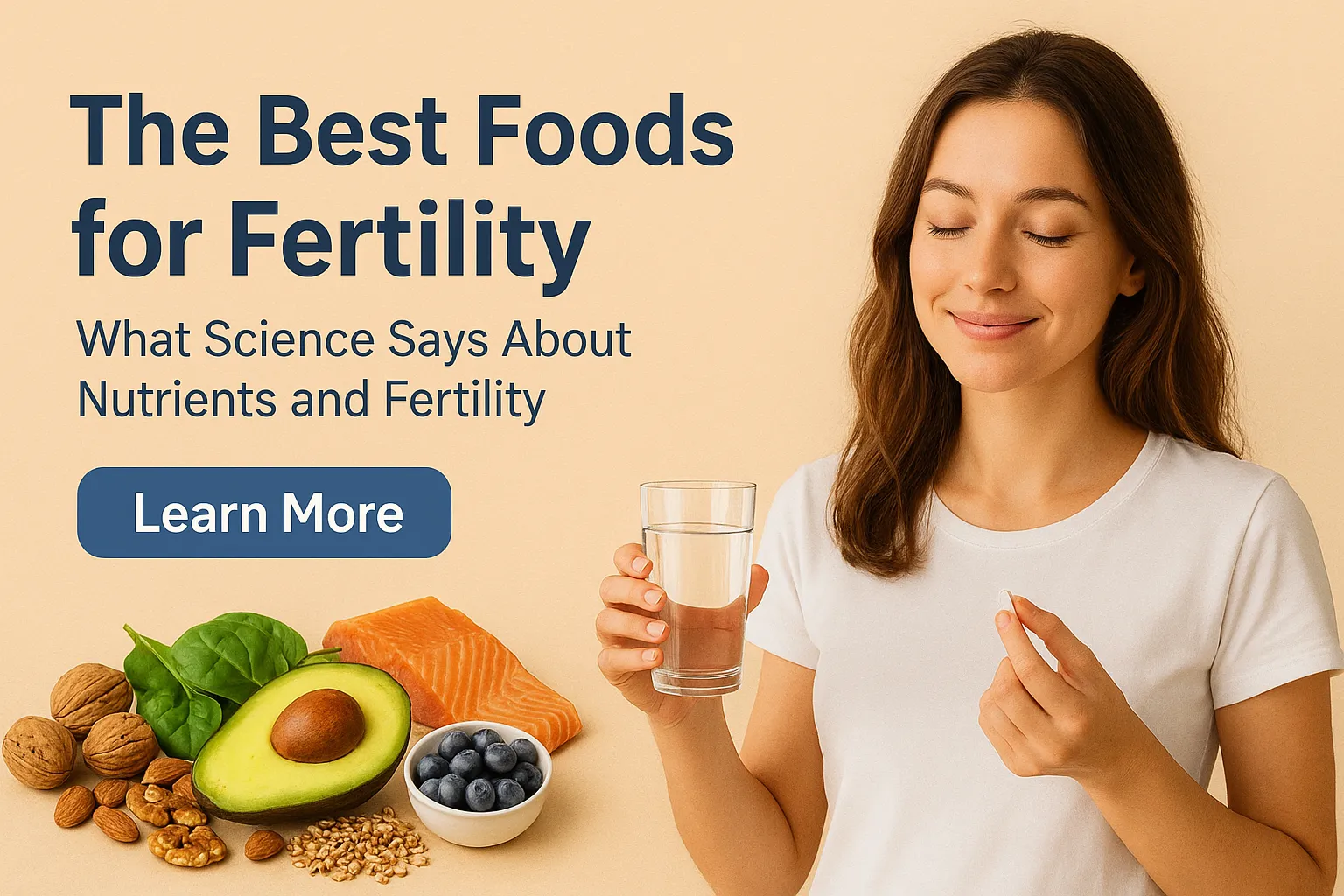
🥑 1. Healthy Fats That Support Hormone Balance
Healthy fats play a crucial role in regulating reproductive hormones, supporting ovulation, and reducing inflammation.

Best Choices
Avocado
Extra virgin olive oil
Nuts & seeds (walnuts, almonds, chia, flaxseed)
Fatty fish (salmon, sardines, mackerel)
Why they help:
Omega-3 fatty acids improve blood flow to reproductive organs and may support more regular ovulation. Harvard School of Public Health’s fertility research found that women who included more monounsaturated fats had higher pregnancy rates compared to those consuming more trans fats.

🍓 2. Antioxidant-Rich Fruits & Vegetables
Oxidative stress can damage egg and sperm DNA. Antioxidants help neutralize that damage.
Top Picks
Berries (blueberries, strawberries, raspberries)
Leafy greens (spinach, kale, arugula)
Citrus fruits
Carrots, sweet potatoes, squash (beta carotene)
Why they help:
Antioxidants like vitamin C, vitamin E, folate, and polyphenols support healthy cell development, protect reproductive cells, and may improve sperm movement and structure.
🥚 3. High-Quality Protein Sources
Not all protein affects the body the same way when it comes to fertility.
Best Options
Eggs
Beans & lentils
Greek yogurt
Lean poultry
Quinoa
Tofu & tempeh
Why they help:
Studies suggest plant-based proteins are especially beneficial for ovulation. Eggs offer choline, important for early fetal development, while legumes support stable blood sugar—a critical factor for ovulatory health.
🍵 4. Whole Grains for Blood Sugar Stability
Balanced blood sugar levels help maintain hormonal balance and regular cycles.
Recommended Whole Grains
Oats
Brown rice
Whole wheat
Barley
Farro
Refined grains can spike insulin levels, which may interfere with ovulation. Choosing whole grains keeps energy stable and hormones regulated.
🫐 5. Full-Fat Dairy (Not Low-Fat!)
This may surprise you, but research from Harvard found that full-fat dairy is linked to improved fertility, while low-fat dairy may negatively affect ovulation in some women.
Best Choices
Whole milk
Full-fat yogurt
Natural cheeses
Aim for 1–2 servings per day.
🐟 6. Omega-3 Rich Fish for Egg Quality and Cycle Health
Fatty fish provide high levels of EPA and DHA—key types of omega-3s.
Why they’re important
May improve egg quality
Support healthy cervical mucus
Reduce chronic inflammation
Beneficial for sperm shape and count
Try including fatty fish 2–3 times per week.
🌰 7. Nuts & Seeds for Fertility-Boosting Micronutrients
These provide zinc, selenium, vitamin E, plant-based omega-3s, and antioxidants.
Especially good options:
Brazil nuts (selenium for sperm health)
Walnuts (omega-3s)
Almonds (vitamin E)
A small handful daily is perfect.
🫘 8. Iron-Rich Foods to Support Ovulation
Women with low iron stores may be more likely to experience ovulatory issues.
Best Sources
Lentils
Chickpeas
Spinach
Pumpkin seeds
Lean red meat (in moderation)
Pair iron-rich foods with vitamin C sources (citrus, peppers) for better absorption.
💧 9. Hydration: The Most Overlooked Fertility Boost
Cervical mucus, ovulation, hormone transport, and nutrient delivery all depend on adequate hydration.
Aim for 2–3 liters per day, more if you live in a hot climate.
🩺 Expert Insight
Reproductive endocrinologist Dr. Valerie Baker has noted that focusing on whole foods—especially healthy fats, plant proteins, fruits, vegetables, and whole grains—can meaningfully support reproductive health. She emphasizes that dietary improvements may enhance both natural conception and treatment outcomes when trying to conceive.
🏁 Summary
A fertility-friendly diet isn’t about restriction—it’s about nourishing your body with foods that support hormones, egg and sperm health, and overall reproductive function. By incorporating more whole foods, healthy fats, antioxidants, and omega-3s, you give your body the best foundation for conception.
What is your reaction to this article?

Hi, I’m Mary! I’m a women’s health educator, certified Fertility Awareness Method (FAM) instructor, and a total cycle nerd who’s been charting my own cycles for over a decade. After ditching hormonal birth control in my mid-20s and realizing how little I actually knew about my body, I dove head-first into the science of natural fertility tracking. What started as a personal experiment turned into a full-on passion: helping women reclaim their cycles, conceive confidently, or avoid pregnancy without side effects. When I’m not geeking out over cervical mucus patterns or BBT charts, you’ll find me sipping herbal tea, tending my (slightly chaotic) houseplant jungle, or walking my rescue dog with a podcast in my ears. I believe knowledge is power, and understanding your cycle is one of the kindest things you can do for yourself. Thanks for being here — let’s decode your body together! 🌿
VIEW AUTHOR PROFILE