
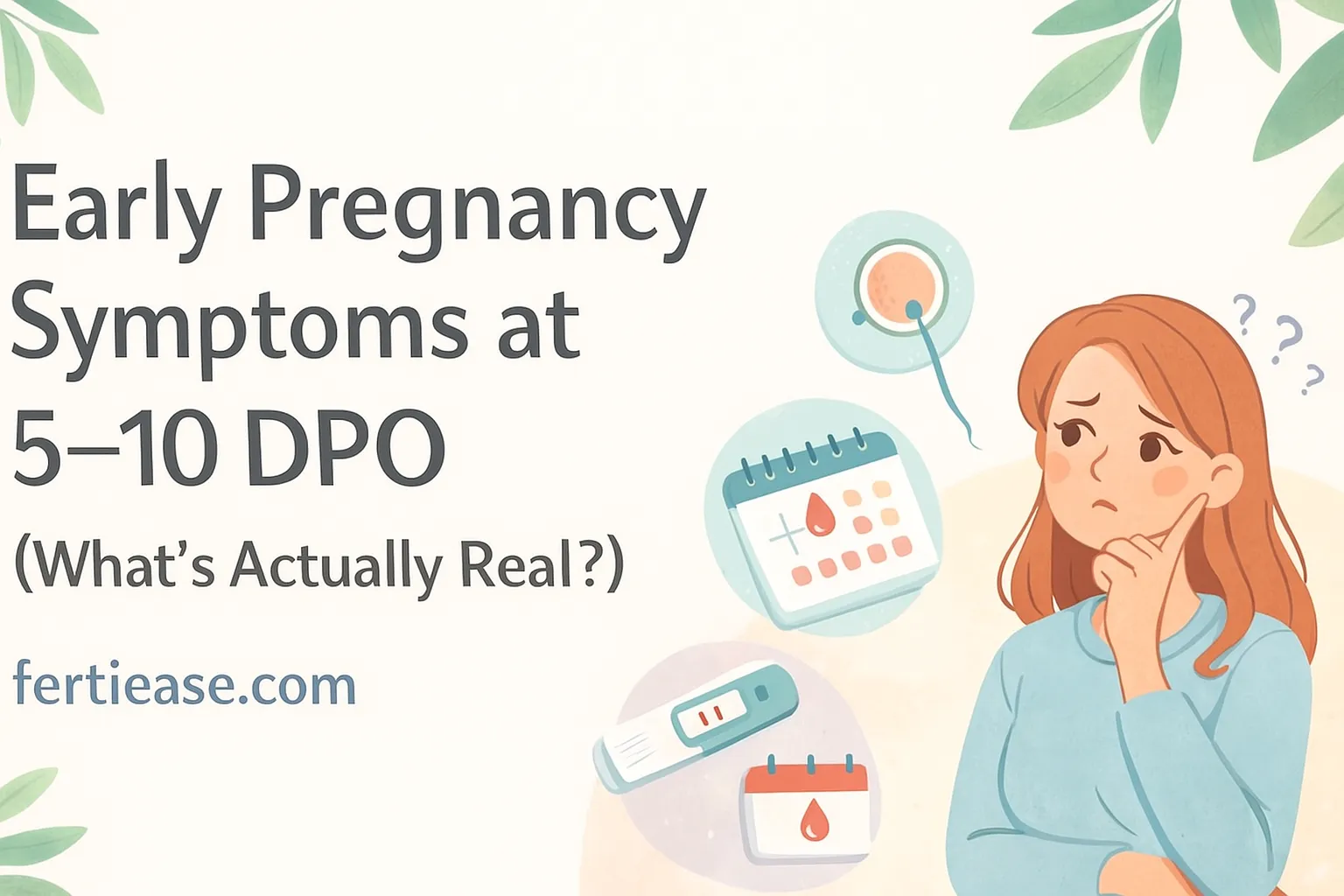
- 1. Early Pregnancy Symptoms at 5–10 DPO: What’s Actually Real?
- 1. ⭐ What’s Happening in Your Body at 5–10 DPO?
- 1. Symptoms That May Appear at 5–10 DPO
- 1.1. 1. Implantation Cramping (6–10 DPO)
- 1.2. 2. Implantation Spotting (Rare, 6–10 DPO)
- 1.3. 3. Increased Fatigue (Possible after 7–10 DPO)
- 1.4. 4. Temperature Shift (If You Track BBT)
- 1.5. 5. Breast Changes (Usually after implantation)
- 2. Symptoms That Are UNLIKELY at 5–7 DPO (But Common After 10+ DPO)
- 3. The Most Telling Early Signs (Based on Evidence)
- 4. When Should You Test?
- 5. When to Be Cautious
- 6. 📣 Expert Insight
Early Pregnancy Symptoms at 5–10 DPO: What’s Actually Real?
If you’re trying to conceive, the two-week wait can feel impossibly long. The days between ovulation and your expected period—especially around 5 to 10 DPO (days past ovulation)—are when every twinge, cramp, or sensation becomes a potential “sign.”
But how early can pregnancy symptoms truly begin? And which ones are based on science rather than wishful thinking?
Here’s a clear, evidence-based breakdown of what you might feel during early pregnancy—and what’s simply too early to detect.
⭐ What’s Happening in Your Body at 5–10 DPO?
Before diving into symptoms, it’s important to understand the timeline:
0 DPO → Ovulation
6–10 DPO → Typical implantation window
After implantation → The body begins producing hCG
hCG rise → The trigger for most pregnancy symptoms
12–14 DPO → First reliable symptoms for most women
This matters because before implantation, true pregnancy symptoms are biologically impossible—your body doesn’t know you’re pregnant yet.
Symptoms That May Appear at 5–10 DPO
1. Implantation Cramping (6–10 DPO)
Some women report mild, brief cramping around the time implantation occurs. It’s usually described as:
low, dull pressure
quick twinges
light pulling sensation
However, the American College of Obstetricians and Gynecologists (ACOG) notes that implantation cramps are not guaranteed and can be easily confused with PMS or digestive activity.
2. Implantation Spotting (Rare, 6–10 DPO)
Light pink or brown spotting may occur when the embryo attaches to the uterine lining.
Key features:
very light
lasts only a few hours or a day
not enough to fill a pad
Despite being popularly discussed, studies show that only around 15–25% of pregnancies involve implantation spotting.
3. Increased Fatigue (Possible after 7–10 DPO)
Fatigue is one of the earliest true pregnancy symptoms because progesterone rises sharply after ovulation. If implantation occurs, this rise accelerates.
You may feel:
heavy tiredness
need for naps
“slowed down” energy
But this can also happen with PMS — so it’s not a reliable indicator by itself.
4. Temperature Shift (If You Track BBT)
Women tracking basal body temperature may notice:
a sustained temperature rise
a “triphasic” pattern, a second jump in temperature around 7–10 DPO
This pattern is associated with pregnancy but not exclusive to it.
5. Breast Changes (Usually after implantation)
Progesterone can cause:
soreness
heaviness
tingling
This symptom overlaps heavily with PMS, so it’s not a dependable early sign.
Symptoms That Are UNLIKELY at 5–7 DPO (But Common After 10+ DPO)
If you feel these symptoms earlier than 10 DPO, they may not be pregnancy-related:
nausea
heightened smell
frequent urination
strong food cravings
dizziness
mood swings
increased discharge
These require higher hCG levels and generally don’t appear until after implantation—often after your missed period.
The Most Telling Early Signs (Based on Evidence)
According to research from the National Institutes of Health (NIH), the earliest statistically meaningful early pregnancy indicators include:
Increased fatigue
Slight temperature increase
Mild cramping around implantation window
Breast sensitivity
Feeling “different” or “off” hormonally
But again: none of these are definitive before a missed period.
When Should You Test?
Here’s the accurate timeline:
8–10 DPO → Possible, but very faint line
10–12 DPO → More reliable
12–14 DPO → Most accurate for early home pregnancy tests
After missed period → 99% accuracy
Testing too early can show a false negative simply because hCG hasn’t risen enough.
When to Be Cautious
Early spotting and cramping can be normal, but you should contact a healthcare provider if:
bleeding becomes heavy
cramping becomes severe
symptoms worsen suddenly
These may be signs of early complications, though uncommon.
📣 Expert Insight
“Most early pregnancy symptoms overlap heavily with PMS. True pregnancy signs typically appear only after implantation, when hCG levels begin to rise.”
— Dr. Laura Mitchell, OB/GYN, Reproductive Health Specialist
What is your reaction to this article?

Penelope Smith is a certified fertility wellness coach and passionate advocate for natural conception with over 8 years of experience guiding couples on their TTC journeys. Drawing from her background in holistic nutrition and reproductive health counseling, she empowers women and men through evidence-based strategies, compassionate support, and practical lifestyle insights. A mother of two conceived naturally after her own fertility challenges, Penelope blends science, empathy, and real-world results in her writing. Her articles have helped thousands optimize ovulation, balance hormones, and embrace the emotional side of trying to conceive. Connect with her at hello@fertiease.com
VIEW AUTHOR PROFILE