
- 1. How Sleep Quality Affects Fertility: What Science Really Says
- 2. The Link Between Circadian Rhythm and Reproductive Hormones
- 2.1. 1. Melatonin
- 2.2. 2. Estrogen and Progesterone
- 2.3. 3. LH & FSH (Ovulation Hormones)
- 2.4. 4. Cortisol
- 3. Sleep Quality Affects Both Male and Female Fertility
- 3.1. In Women
- 3.2. In Men
- 4. The Role of Sleep in Stress Management
- 5. How Much Sleep Do You Need for Optimal Fertility?
- 6. Practical Tips to Improve Sleep for Better Fertility
- 6.1. 1. Create a Sleep-Friendly Evening Ritual
- 6.2. 2. Prioritize Morning Sunlight
- 6.3. 3. Avoid Blue Light at Night
- 6.4. 4. Improve Bedroom Environment
- 6.5. 5. Mind Your Diet
- 6.6. 6. Consider Sleep-Friendly Supplements
- 7. When Poor Sleep May Signal a Deeper Problem
- 8. Final Thoughts
How Sleep Quality Affects Fertility: What Science Really Says
Sleep is one of the most underrated foundations of reproductive health. While nutrition, supplements, and lifestyle habits often take center stage in fertility discussions, sleep quietly shapes hormonal balance, ovulation patterns, sperm quality, stress levels, and overall reproductive function. Yet many individuals trying to conceive underestimate just how strongly the body’s internal clock influences fertility outcomes.
Today, we dive deep into what research reveals about sleep and fertility—and how optimizing your nightly routine may significantly improve your chances of conception.


The Link Between Circadian Rhythm and Reproductive Hormones
Your body operates on a natural 24-hour clock known as the circadian rhythm. This internal system regulates everything from metabolism to immune function—but most importantly, it governs hormone production.
When sleep is disrupted, your reproductive hormones fluctuate in ways that may hinder conception:
1. Melatonin
Melatonin not only makes you sleepy but also protects egg quality. Lower melatonin levels—often due to late-night screen exposure or irregular sleep patterns—are associated with oxidative stress in ovarian follicles.
2. Estrogen and Progesterone
These cycle-regulating hormones rely heavily on stable circadian rhythms. Poor sleep can reduce luteal phase progesterone levels, potentially interfering with implantation.
3. LH & FSH (Ovulation Hormones)
Research suggests that shift workers with inconsistent sleep cycles often experience irregular ovulation because LH surges become unpredictable.
4. Cortisol
The stress hormone cortisol rises when sleep is insufficient. High cortisol disrupts reproductive hormones, delays ovulation, and lowers libido—making conception more difficult.
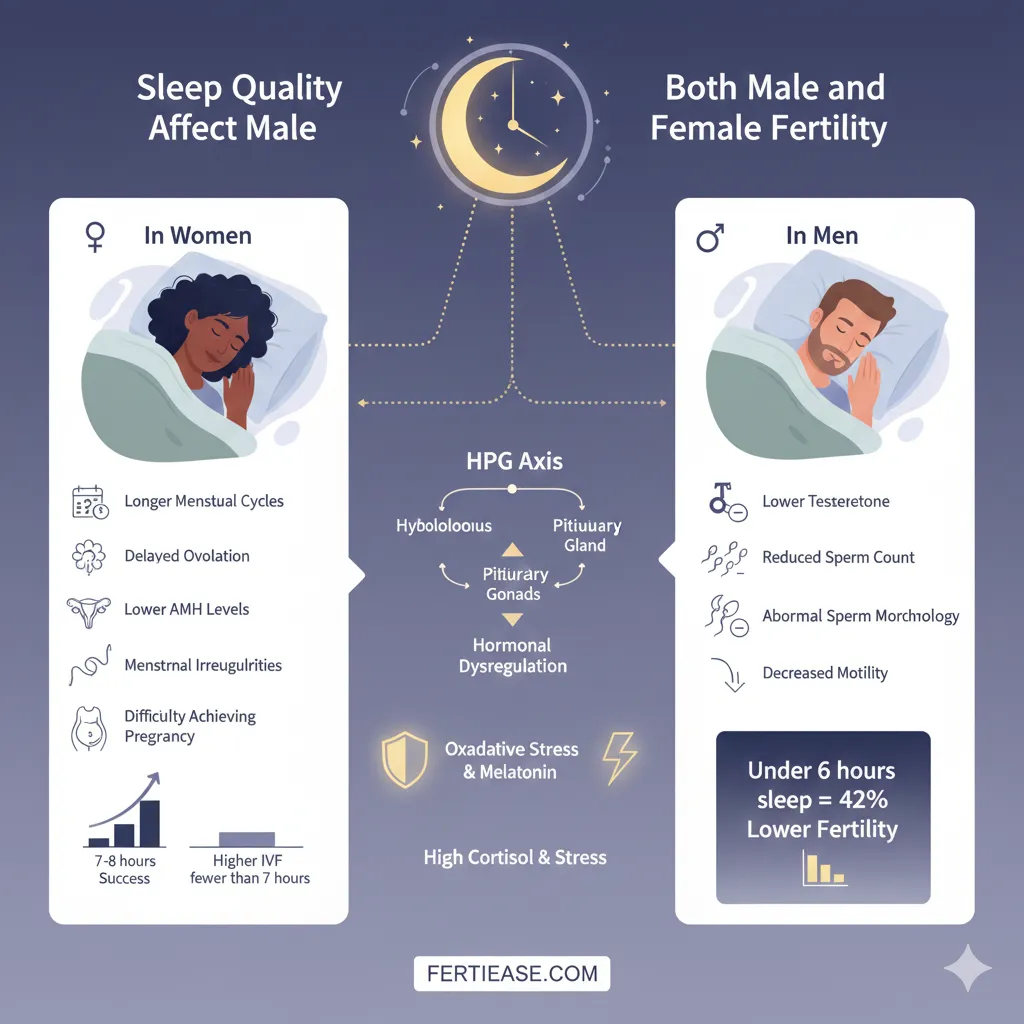
Sleep Quality Affects Both Male and Female Fertility
In Women
Women who sleep fewer than 7 hours or more than 9 hours per night are more likely to:
experience longer menstrual cycles
have delayed ovulation
show lower AMH levels
develop menstrual irregularities
face difficulty achieving pregnancy
One study showed that women undergoing IVF who slept 7–8 hours had significantly higher success rates compared to those with sleep deficiencies.
In Men
Sperm health is deeply intertwined with sleep. Research links poor sleep duration with:
lower testosterone
reduced sperm count
abnormal sperm morphology
decreased motility
Men who regularly sleep under 6 hours have been found to have up to 42% lower fertility compared to men with adequate sleep.
The Role of Sleep in Stress Management
Stress is one of the most common fertility barriers—and sleep is the body’s natural stress regulator.
When sleep quality improves:
cortisol decreases
inflammation reduces
emotional resilience increases
reproductive hormones stabilize
For couples trying to conceive, lowering stress through better sleep can dramatically improve the fertility landscape.
How Much Sleep Do You Need for Optimal Fertility?
Experts recommend:
7–9 hours of quality sleep per night
consistent sleep and wake times
reducing screen exposure 2 hours before bed
limiting caffeine after early afternoon
sleeping in a dark, cool room (18–20°C ideal)
Even small consistency improvements can help restore hormonal balance.
Practical Tips to Improve Sleep for Better Fertility
1. Create a Sleep-Friendly Evening Ritual
Aim for a relaxing routine—warm shower, herbal tea, reading—rather than screens.
2. Prioritize Morning Sunlight
Sun exposure early in the day strengthens circadian rhythms and melatonin timing.
3. Avoid Blue Light at Night
Blue light suppresses melatonin. Use night mode or blue-light filters if needed.
4. Improve Bedroom Environment
Invest in good bedding, maintain quiet surroundings, and eliminate light sources.
5. Mind Your Diet
Avoid heavy meals before bed. Opt for magnesium-rich foods that support relaxation.
6. Consider Sleep-Friendly Supplements
Melatonin, magnesium glycinate, and L-theanine may support rest, but always consult a specialist before starting supplements—especially when trying to conceive.

When Poor Sleep May Signal a Deeper Problem
If you regularly experience:
insomnia
loud snoring
waking up gasping
unexplained fatigue
night sweats
restless legs
You may have an underlying condition like sleep apnea, thyroid imbalance, or iron deficiency. These can affect fertility and should be evaluated by a healthcare provider.
Final Thoughts
Sleep isn’t just a daily habit—it’s a biological necessity that shapes your reproductive future. Improving sleep quality is one of the most accessible, cost-effective ways to enhance fertility for both men and women. By respecting your body’s natural rhythms, you create a stronger foundation for hormonal balance, cycle regularity, and reproductive success.
As reproductive endocrinologist Dr. Maria Esposito notes:
“Sleep is not optional when it comes to fertility. When patients improve their sleep habits, we often see measurable hormonal improvements within just weeks.”
What is your reaction to this article?

Penelope Smith is a certified fertility wellness coach and passionate advocate for natural conception with over 8 years of experience guiding couples on their TTC journeys. Drawing from her background in holistic nutrition and reproductive health counseling, she empowers women and men through evidence-based strategies, compassionate support, and practical lifestyle insights. A mother of two conceived naturally after her own fertility challenges, Penelope blends science, empathy, and real-world results in her writing. Her articles have helped thousands optimize ovulation, balance hormones, and embrace the emotional side of trying to conceive. Connect with her at hello@fertiease.com
VIEW AUTHOR PROFILE