

- 1. How Long Does It Really Take to Get Pregnant? A Realistic, Science-Based Guide
- 1.1. Understanding the Monthly Probability of Pregnancy
- 1.1.1. Why isn’t the chance higher?
- 1.2. So, How Long Does It Usually Take?
- 1.3. Age: The Most Important Fertility Factor
- 1.3.1. Women Under 35
- 1.3.2. Ages 35–38
- 1.3.3. Ages 39+
- 1.3.4. What About Men?
- 1.4. Timing Matters: The Fertile Window
- 1.5. Medical Conditions That Can Affect TTC Time
- 1.5.1. Female Factors
- 1.5.2. Male Factors
- 1.6. Lifestyle Factors That Influence How Fast Pregnancy Happens
- 1.7. When Should You Seek Medical Advice?
- 1.8. Emotional Aspects: TTC Isn’t Just Physical
- 1.9. Final Thoughts
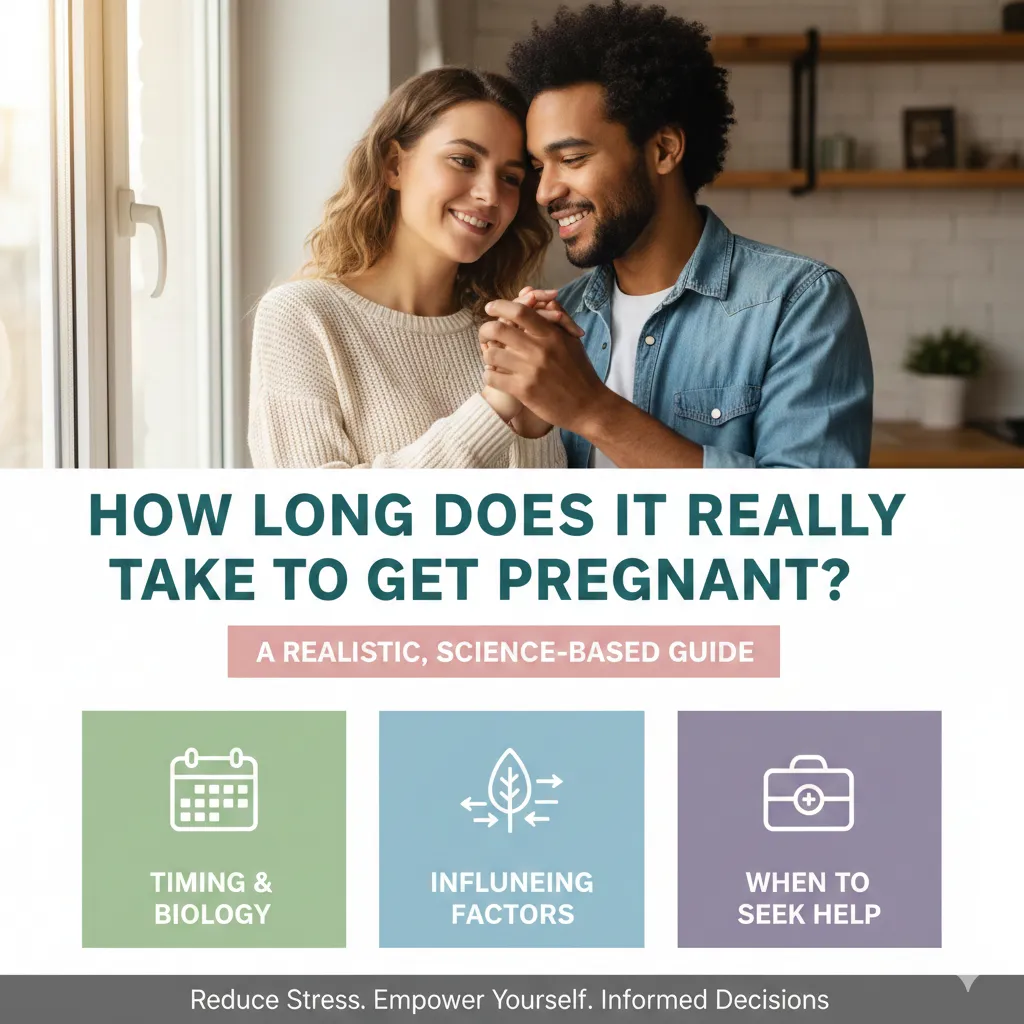
How Long Does It Really Take to Get Pregnant? A Realistic, Science-Based Guide
For many hopeful parents, the journey to pregnancy begins with excitement—quickly followed by questions, expectations, and sometimes worry. One of the most common concerns is simple yet emotionally loaded:
“How long will it take for us to get pregnant?”
While movies and social media sometimes make conception look immediate, real life operates on biology, timing, and probability—not fantasy. Understanding how fertility actually works can help reduce stress, ease unrealistic expectations, and empower couples to make informed decisions.

In this evidence-based guide, we break down timing, influencing factors, and when to consider seeking medical advice.
Understanding the Monthly Probability of Pregnancy
Even in perfectly healthy couples, conception is not guaranteed each month. On average:
Couples in their 20s to early 30s have a 20–25% chance per cycle.
In the mid-30s, this drops to around 15% per cycle.
By 40, the chance of conceiving naturally per month is often 5% or less.
This doesn’t mean pregnancy is unlikely—it simply means human reproduction naturally involves variability.
Why isn’t the chance higher?
Even with sex during the fertile window, conception depends on:
timing of ovulation
egg quality
sperm motility
fallopian tube health
endometrial receptivity
In other words, many biological processes must align perfectly for a pregnancy to begin.
So, How Long Does It Usually Take?
Research from the American Society for Reproductive Medicine (ASRM) shows:
50–60% of couples conceive within 3 months
70% within 6 months
85% within 12 months
92% within 18 months
So if you’ve been trying for a few months without success, you are still well within the normal range.
Age: The Most Important Fertility Factor
Women Under 35
Most will conceive within 12 months of regular, unprotected intercourse.
Ages 35–38
Fertility starts to decline more noticeably due to decreased ovarian reserve.
Ages 39+
Egg quality reduction becomes a primary factor affecting both conception rates and miscarriage risk.
What About Men?
While men remain fertile longer, sperm motility and morphology begin to decline after age 40, contributing to longer TTC timelines.

Timing Matters: The Fertile Window
The fertile window is the 5 days before ovulation + ovulation day.
The highest chance (around 30%) occurs when intercourse happens 1–2 days before ovulation.
Having sex every 1–2 days during this window significantly increases conception rates.
Tools like ovulation predictor kits (OPKs), cervical mucus monitoring, and cycle-tracking apps can help pinpoint fertile days more accurately.
Medical Conditions That Can Affect TTC Time
Certain underlying health issues may lengthen the timeline:
Female Factors
Polycystic ovary syndrome (PCOS)
Endometriosis
Irregular cycles
Thyroid disorders
Blocked fallopian tubes
Low ovarian reserve (AMH)
Male Factors
Low sperm count
Poor motility
Varicocele
Hormonal imbalances
Chronic illness or medications
These conditions don’t necessarily prevent pregnancy—but they often require tailored care or medical support.
Lifestyle Factors That Influence How Fast Pregnancy Happens
Optimizing daily habits can significantly support fertility:
Adequate sleep (7–9 hours)
Healthy BMI
Moderate exercise
Limiting alcohol and avoiding smoking
Balanced diet rich in antioxidants and whole foods
Reducing caffeine below 200 mg/day
Studies show that couples who improve lifestyle factors often see faster TTC success.

When Should You Seek Medical Advice?
Experts recommend evaluation when:
Under age 35: trying for 12 months without success
Age 35–39: trying for 6 months
Age 40+: consider evaluation after 3 months
You should also seek medical support sooner if you experience:
irregular or absent periods
severe menstrual pain
known reproductive conditions
recurrent pregnancy loss
concerns about sperm health
Early assessment can prevent unnecessary stress and speed up solutions.
Emotional Aspects: TTC Isn’t Just Physical
Trying to conceive can bring:
hope
disappointment
anxiety
pressure
relationship strain
This emotional rollercoaster is normal. Many couples benefit from mindfulness practices, counseling, or joining supportive TTC communities.
Remember: a longer TTC timeline does not mean failure—it often simply reflects natural biology.
Final Thoughts
How long it takes to get pregnant depends on a combination of age, health, timing, stress, and lifestyle. While some couples conceive quickly, others need several months—or longer—and both are normal.
As reproductive endocrinologist Dr. Elaine Brooks explains:
“Conception is a probability game, not a performance test. Most couples will succeed with time, consistency, and a bit of patience.”
If you’re trying to conceive, focus on understanding your cycle, optimizing health, and communicating openly with your partner. And remember—you’re not alone on this journey.
What is your reaction to this article?

Penelope Smith is a certified fertility wellness coach and passionate advocate for natural conception with over 8 years of experience guiding couples on their TTC journeys. Drawing from her background in holistic nutrition and reproductive health counseling, she empowers women and men through evidence-based strategies, compassionate support, and practical lifestyle insights. A mother of two conceived naturally after her own fertility challenges, Penelope blends science, empathy, and real-world results in her writing. Her articles have helped thousands optimize ovulation, balance hormones, and embrace the emotional side of trying to conceive. Connect with her at hello@fertiease.com
VIEW AUTHOR PROFILE