
Low progesterone symptoms often appear quietly at first—subtle changes in your mood, cycle, sleep, or energy that don’t feel dramatic enough to worry about. But progesterone is one of the most essential hormones for ovulation, cycle regulation, and early pregnancy support. When levels drop too low, your body starts sending signals long before fertility issues or severe PMS show up.
- 1. 1. Short Luteal Phases (10 Days or Less)
- 2. 2. PMS That Feels “Too Intense”
- 3. 3. Consistent Fatigue, Especially in the Luteal Phase
- 4. 4. Spotting Before Your Period
- 5. 5. Trouble Sleeping or Waking Up at 2–4 AM
- 6. 6. Heightened Anxiety or Mood Instability
- 7. 7. Headaches During the Luteal Phase
- 8. 8. Heavy or Irregular Periods
- 9. 9. Difficulty Conceiving or Staying Pregnant
- 10. 10. Low Libido or “Hormonal Disconnection”
- 1. What Causes Low Progesterone?
- 2. When Should You Consider Testing?
Progesterone is the hormone that stabilizes your cycles, balances estrogen, strengthens the uterine lining, calms the nervous system, and prepares the body for a potential pregnancy. When progesterone is too low, even by a small margin, your body feels it — sometimes subtly, sometimes intensely.
Understanding how low progesterone shows up is one of the most valuable things you can do for your reproductive health. Many women struggle for years with cycle symptoms without realizing that progesterone imbalance is the core issue.

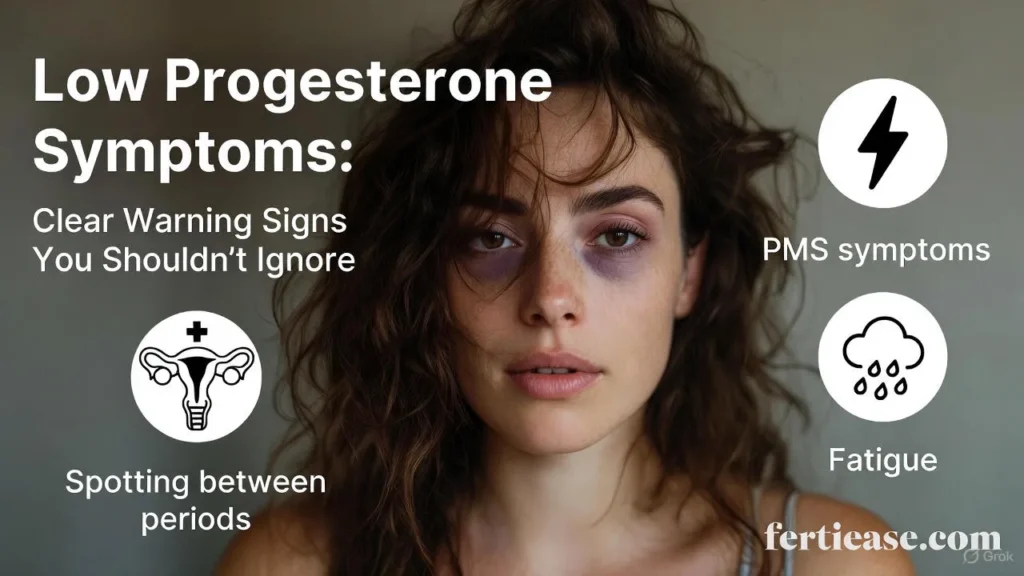
This guide breaks down the real-life, clinically recognized symptoms of low progesterone and explains why each one happens.
1. Short Luteal Phases (10 Days or Less)
A healthy luteal phase — the time between ovulation and your next period — should last 12 to 14 days.
Low progesterone causes:
luteal phases of 8–10 days
spotting before the period
difficulty maintaining a pregnancy
weaker implantation environment
This is one of the clearest medical indicators of progesterone deficiency.
2. PMS That Feels “Too Intense”
Progesterone has a naturally calming effect on the brain.
When it is low, PMS becomes:
more emotional
more irritable
more anxious
physically uncomfortable
Women often describe this as:
“My PMS feels stronger than it used to.”
3. Consistent Fatigue, Especially in the Luteal Phase
Progesterone supports metabolism, thyroid signaling, and energy production.
Low levels can cause:
afternoon crashes
morning grogginess
brain fog
difficulty concentrating
This fatigue often appears specifically after ovulation.
4. Spotting Before Your Period
Light brown or pink spotting 1–4 days before your period is one of the most reliable early signs of progesterone deficiency.
It means the uterine lining is breaking down early — often because progesterone isn’t high enough to maintain it.
5. Trouble Sleeping or Waking Up at 2–4 AM
Progesterone helps activate GABA, a calming neurotransmitter.
Low levels cause:
difficulty falling asleep
waking in the early morning hours
restless sleep
Many women suddenly develop sleep problems as progesterone naturally declines in their mid-30s.
6. Heightened Anxiety or Mood Instability
Progesterone influences emotional regulation.
Low progesterone is associated with:
anxious thoughts
irritability
emotional sensitivity
stress intolerance
faster mood shifts
This is one of the most commonly overlooked symptoms.
7. Headaches During the Luteal Phase
Low progesterone → estrogen becomes “too dominant.”
This imbalance can trigger:
luteal phase headaches
migraines near the period
neck/shoulder tension
Many women notice headaches specifically the week before their period.
8. Heavy or Irregular Periods
Progesterone stabilizes and “organizes” the menstrual cycle.
When levels drop, periods may become:
heavier
longer
inconsistent
clot-heavy
This happens because estrogen builds the lining, but progesterone regulates the shedding.
9. Difficulty Conceiving or Staying Pregnant
Progesterone supports:
ovulation quality
uterine lining thickness
implantation
early pregnancy maintenance
Low progesterone is one of the most common causes of early pregnancy loss and TTC difficulty — and it is highly treatable.
10. Low Libido or “Hormonal Disconnection”
A sudden drop in sexual desire — especially after ovulation — is a classic sign of low progesterone.
Women report:
low libido
vaginal dryness
difficulty becoming aroused
Because progesterone and testosterone work in balance, low progesterone impacts both hormonal and emotional desire.
What Causes Low Progesterone?
chronic stress (the #1 cause)
thyroid imbalance
irregular ovulation
insulin resistance
perimenopause
high estrogen levels
overly intense exercise
poor sleep
inflammation
Low progesterone is rarely “random” — it’s usually connected to lifestyle or hormonal rhythm.
When Should You Consider Testing?
Testing is helpful if you experience:
spotting before period
intense PMS
irregular cycles
short luteal phases
TTC difficulties
The test is simple:
👉 Progesterone blood test, 7 days after ovulation (usually cycle day 21).
What is your reaction to this article?

Penelope Smith is a certified fertility wellness coach and passionate advocate for natural conception with over 8 years of experience guiding couples on their TTC journeys. Drawing from her background in holistic nutrition and reproductive health counseling, she empowers women and men through evidence-based strategies, compassionate support, and practical lifestyle insights. A mother of two conceived naturally after her own fertility challenges, Penelope blends science, empathy, and real-world results in her writing. Her articles have helped thousands optimize ovulation, balance hormones, and embrace the emotional side of trying to conceive. Connect with her at hello@fertiease.com
VIEW AUTHOR PROFILE