
- 1. 1. Stabilize Blood Sugar Levels (Your Hormones Will Thank You)
- 2. Balance Hormones Naturally With Nutrient-Dense Foods
- 2.1. Best hormone-balancing foods include:
- 3. 2. Support Gut Health for Hormonal Detoxification
- 4. 3. Reduce Chronic Stress to Lower Cortisol
- 5. 4. Prioritize Sleep (Your Hormonal Reset Button)
- 6. 5. Reduce Endocrine Disruptors (Hidden Hormone Blockers)
- 7. Balance Hormones Naturally With the Right Supplements
- 8. 6. Move Daily — But Don’t Overtrain
- 9. 7. Maintain a Healthy Fat Intake (Hormones Need Fat)
- 10. 8. Stay Hydrated to Support Hormone Transport
- 11. 9. Track Symptoms to Understand Your Hormonal Patterns
- 11.1. 🔗 Internal Link
- 11.2. ⭐ Final Thoughts
Balance hormones naturally is one of the most popular wellness goals today, especially as hormonal imbalances have become increasingly common due to stress, poor nutrition, environmental toxins, and sleep disruptions. Healthy hormones are essential for reproductive wellness, fertility, metabolism, mood regulation, and overall vitality. Yet many people don’t realize how powerfully lifestyle choices influence their hormonal blueprint — and how small adjustments can create meaningful hormonal shifts.
This guide breaks down nine science-backed, practical strategies that can help you restore hormonal harmony without relying on extreme diets or complicated routines. It also complements our previous male fertility topics by expanding the focus to overall reproductive health, for both men and women.

9 Powerful Ways To Balance Hormones Naturally Backed By Science Fertiease
1. Stabilize Blood Sugar Levels (Your Hormones Will Thank You)
Blood sugar spikes cause insulin surges — and insulin imbalance interferes with reproductive hormones like estrogen, progesterone, and testosterone. Over time, dysregulated insulin can contribute to PCOS, infertility, irregular cycles, mood swings, and fatigue.

How to stabilize blood sugar naturally:
Eat protein with every meal
Favor low-glycemic foods
Avoid sugary drinks
Add fiber-rich vegetables
Stop skipping breakfast
The Mayo Clinic notes that balanced blood sugar improves insulin sensitivity, which supports overall hormonal health.
Source: https://www.mayoclinic.org/
Balance Hormones Naturally With Nutrient-Dense Foods
Diet plays a direct role in hormonal balance. Certain nutrients regulate cortisol, thyroid hormones, reproductive hormones, and serotonin.
Best hormone-balancing foods include:
Salmon (omega-3s + anti-inflammatory effect)
Eggs (choline + vitamin D)
Avocado (healthy fats for hormone synthesis)
Leafy greens (magnesium for stress reduction)
Berries (antioxidants supporting ovary & testicular function)
Pumpkin seeds (zinc for reproductive hormones)
These support both male and female reproductive balance.
2. Support Gut Health for Hormonal Detoxification
Your gut microbiome directly affects estrogen levels.
If gut bacteria are out of balance, the body may recycle old estrogen instead of eliminating it — this leads to estrogen dominance, a common cause of PMS, mood swings, weight gain, and heavy cycles.
To improve gut health naturally:
Add probiotics
Eat fermented foods (yogurt, kefir, kimchi)
Increase prebiotic fiber
Reduce processed foods
A healthy gut equals healthier hormones.
3. Reduce Chronic Stress to Lower Cortisol
Cortisol is one of the most disruptive hormones when chronically elevated.
High cortisol can:
Stop ovulation
Reduce sperm count
Disrupt sleep
Increase fat storage
Raise inflammation
Simple stress-management techniques like meditation, walking, deep breathing, and yoga help normalize cortisol production.
Harvard Health highlights meditation as one of the strongest natural tools for cortisol regulation.
Source: https://www.health.harvard.edu/
4. Prioritize Sleep (Your Hormonal Reset Button)
Most hormone regulation occurs during deep sleep, including progesterone production, thyroid balancing, testosterone release, and cortisol reset.
Sleep recommendations for hormonal wellness:
7–9 hours nightly
No screens 1 hour before bed
Dark, cool room
Consistent sleep-wake schedule
Poor sleep is strongly linked to hormonal disorders such as PCOS, low testosterone, and irregular cycles.
5. Reduce Endocrine Disruptors (Hidden Hormone Blockers)
Endocrine-disrupting chemicals (EDCs) mimic hormones and interfere with natural hormone signaling.
They are commonly found in:
Plastics (BPA)
Non-stick cookware
Scented candles
Artificial fragrances
Cosmetics
Cleaning products
NIH research confirms that EDCs contribute to infertility, hormonal imbalance, and thyroid disruption.
Source: https://www.nih.gov/
Swap to:
Glass containers
Clean beauty products
Fragrance-free cleaning supplies
Stainless steel pans
Small swaps → big hormonal improvements.
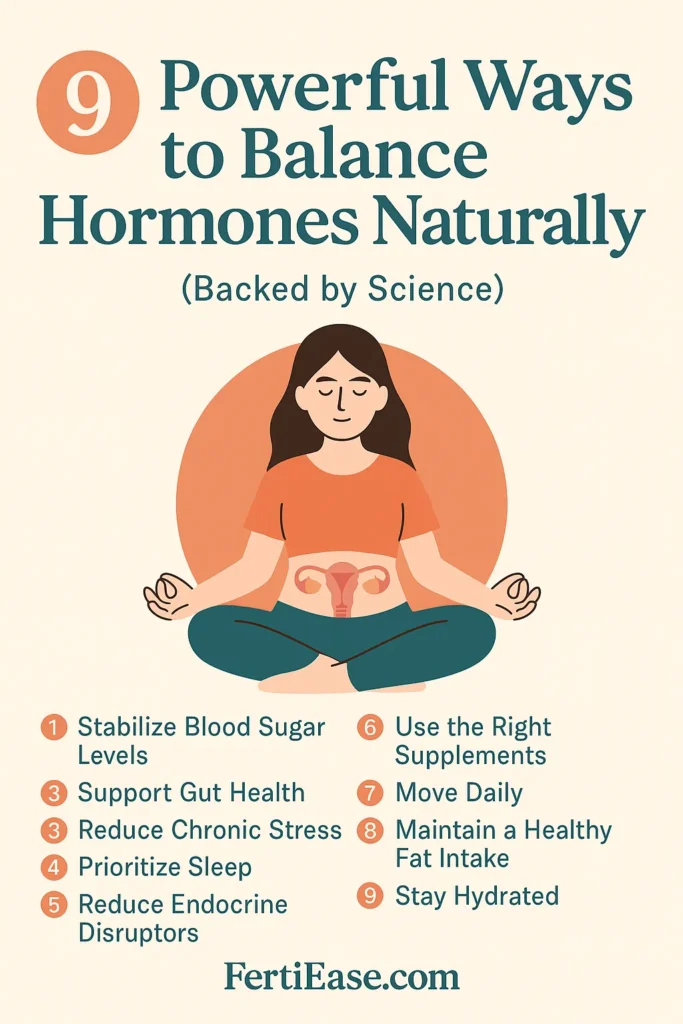
9 Powerful Ways To Balance Hormones Naturally Backed By Science 2 Fertiease
Balance Hormones Naturally With the Right Supplements
Certain supplements can help regulate reproductive and metabolic hormones:
Magnesium → lowers cortisol & reduces PMS symptoms
Vitamin D → crucial for fertility & hormone production
Omega-3 → reduces inflammation affecting hormone pathways
Ashwagandha → supports adrenal balance & reduces anxiety
B-complex vitamins → strengthen hormonal cycles
Probiotics → improve estrogen detoxification
Always consult with a healthcare professional before starting supplements.
6. Move Daily — But Don’t Overtrain
Moderate exercise helps regulate insulin, cortisol, testosterone, and estrogen.
Best hormone-friendly workouts:
Walking
Pilates
Strength training
Low-impact cardio
Yoga
Avoid excessive high-intensity workouts, which can elevate cortisol and disrupt ovulation.
7. Maintain a Healthy Fat Intake (Hormones Need Fat)
Healthy fats are essential for hormone production. Without adequate fat intake, the body cannot produce estrogen, progesterone, or testosterone efficiently.
Add daily:
Olive oil
Avocado
Nuts and seeds
Fatty fish
Whole eggs
Low-fat diets often worsen hormonal issues rather than fix them.
8. Stay Hydrated to Support Hormone Transport
Hormones travel through the bloodstream, and dehydration thickens blood volume, making hormone transport less efficient.
Aim for 2–3 liters of water daily.
9. Track Symptoms to Understand Your Hormonal Patterns
Reproductive wellness isn’t only about treatment — it’s about awareness.
Tracking sleep, mood, cycle changes, energy, libido, and cravings can reveal hormonal patterns that might otherwise go unnoticed.
Apps, journals, and cycle trackers help identify imbalances early.
🔗 Internal Link
For improving male hormone health, read:
👉 9 Scientifically Proven Ways to Increase Sperm Count Fast
⭐ Final Thoughts
Hormones are deeply sensitive to lifestyle — but this sensitivity is also what makes them highly adaptable. When you nourish your body with balanced meals, quality sleep, reduced toxins, stress control, and mindful movement, your hormones respond quickly. Natural balance is absolutely achievable with consistency and awareness.
What is your reaction to this article?

Penelope Smith is a certified fertility wellness coach and passionate advocate for natural conception with over 8 years of experience guiding couples on their TTC journeys. Drawing from her background in holistic nutrition and reproductive health counseling, she empowers women and men through evidence-based strategies, compassionate support, and practical lifestyle insights. A mother of two conceived naturally after her own fertility challenges, Penelope blends science, empathy, and real-world results in her writing. Her articles have helped thousands optimize ovulation, balance hormones, and embrace the emotional side of trying to conceive. Connect with her at hello@fertiease.com
VIEW AUTHOR PROFILE