
- 1. 🌱 First, the Truth: What Actually Causes Miscarriage?
- 2. 🤰 So… Can Exercise Cause Miscarriage?
- 2.1. Short answer:
- 3. 🧠 Why This Fear Is So Common
- 4. 💪 7 Powerful Facts About Exercise and Miscarriage
- 4.1. 1. Most Miscarriages Happen Before Exercise Even Matters
- 4.2. 2. Moderate Exercise Is Considered Safe
- 4.3. 3. Exercise Does NOT “Shake” the Baby
- 4.4. 4. High-Risk Activities Are the Real Concern
- 4.5. 5. Overexertion, Not Exercise, Can Be a Problem
- 4.6. 6. Exercise Can Reduce Pregnancy Complications
- 4.7. 7. Restrictions Are Medical, Not Universal
- 5. 🚨 When Exercise Should Be Avoided or Modified
- 6. 📌 Related Articles
- 7. 🧠 Mental Health: Fear Can Be More Harmful Than Movement
- 8. ✅ Final Thoughts
One of the most frightening questions many women ask after seeing a positive pregnancy test is: can exercise cause miscarriage?
Whether you were active before pregnancy or are trying to stay healthy now, fear and uncertainty often replace confidence when it comes to movement.
Social media, outdated advice, and misinformation frequently suggest that physical activity is dangerous during pregnancy. The truth, however, is far more reassuring—and empowering.
In this article, we’ll break down what science actually says, explain which exercises are safe, what truly increases miscarriage risk, and help you move forward with confidence instead of fear.

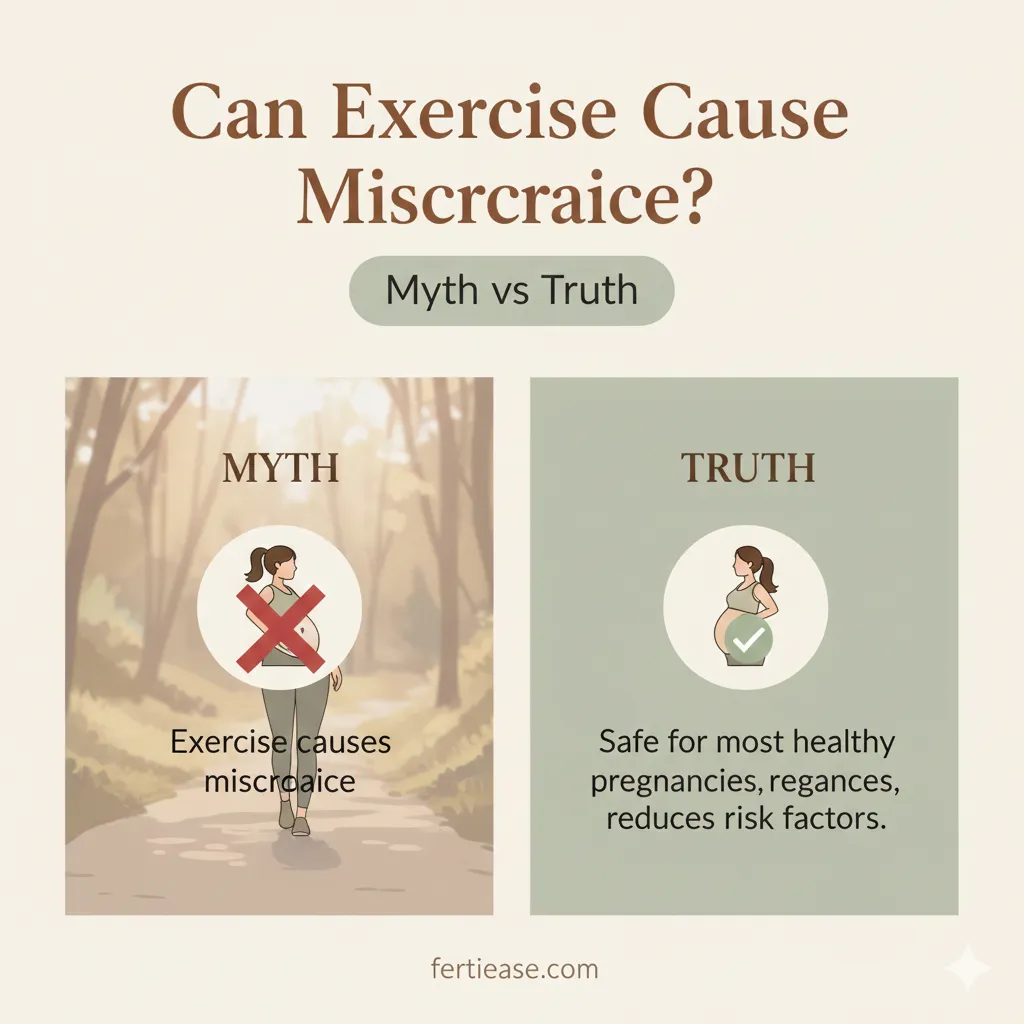
Can Exercise Cause Miscarriage 7 Powerful Facts Every Pregnant Woman Should Know 1 Fertiease
🌱 First, the Truth: What Actually Causes Miscarriage?
Before answering can exercise cause miscarriage, it’s essential to understand what miscarriages are usually caused by.
The most common causes of miscarriage include:
Chromosomal abnormalities (most common)
Hormonal issues
Uterine abnormalities
Infections
Underlying medical conditions
👉 Exercise is NOT a common cause of miscarriage.
In fact, in most healthy pregnancies, moderate physical activity is considered safe and beneficial.
🤰 So… Can Exercise Cause Miscarriage?
Short answer:
👉 No, normal pregnancy-safe exercise does not cause miscarriage.
Multiple large medical organizations agree that:
Exercise does not increase miscarriage risk
Staying active can improve pregnancy outcomes
Fear-based avoidance of movement is often unnecessary
🔗 External reference:
https://www.acog.org
🧠 Why This Fear Is So Common
The fear around exercise and miscarriage usually comes from:
Older generations’ advice (“don’t move too much”)
Misunderstanding early pregnancy symptoms
Coincidental timing (exercise followed by bleeding)
Internet myths and forums
Bleeding or cramping after exercise is often hormonal or implantation-related, not exercise-induced.
💪 7 Powerful Facts About Exercise and Miscarriage

Can Exercise Cause Miscarriage? 7 Powerful Facts Every Pregnant Woman Should Know
1. Most Miscarriages Happen Before Exercise Even Matters
Many miscarriages occur before a woman knows she is pregnant.
This means:
Light or moderate exercise is rarely a factor
Pregnancy often ends due to genetic reasons beyond control
Blaming movement creates unnecessary guilt
2. Moderate Exercise Is Considered Safe
Activities widely considered safe during pregnancy include:
Walking
Prenatal yoga
Swimming
Low-impact strength training
Prenatal Pilates
These exercises improve circulation, mood, and overall pregnancy health.
3. Exercise Does NOT “Shake” the Baby
A common myth is that movement can dislodge the embryo.
In reality:
The uterus is well-protected
Amniotic fluid cushions the baby
Normal movement cannot “shake loose” a pregnancy
Your body is designed to protect your baby.
4. High-Risk Activities Are the Real Concern
While general exercise is safe, some activities should be avoided.
Higher-risk activities include:
Contact sports
Activities with fall risk (skiing, horseback riding)
Heavy lifting with breath-holding
Overheating (hot yoga, intense heat)
Avoiding these is about injury prevention, not miscarriage fear.
5. Overexertion, Not Exercise, Can Be a Problem
Exercising to exhaustion—especially without hydration—can stress the body.
Warning signs to stop include:
Dizziness
Shortness of breath
Chest pain
Severe fatigue
Listening to your body matters more than intensity.
6. Exercise Can Reduce Pregnancy Complications
Staying active may actually lower certain risks, including:
Gestational diabetes
Excessive weight gain
Back pain
Stress and anxiety
A healthier pregnancy overall supports better outcomes.
7. Restrictions Are Medical, Not Universal
Some women are advised to limit activity due to:
Placenta previa
Cervical insufficiency
Severe bleeding
Specific medical conditions
In these cases, restrictions are personalized, not a general rule.
🔗 External reference:
https://www.nhs.uk
🚨 When Exercise Should Be Avoided or Modified
Stop exercising and contact a healthcare provider if you experience:
Vaginal bleeding
Severe abdominal pain
Dizziness or fainting
Regular contractions
Leakage of fluid
These symptoms are not caused by exercise—but signal the need for evaluation.
📌 Related Articles
👉 [Best Exercises During Pregnancy by Trimester: 9 Powerful Moves for a Healthy Body]
👉 [Safe Core Exercises During Pregnancy: 8 Powerful Moves to Protect Your Body]
👉 [Diastasis Recti During Pregnancy: 9 Critical Things You Must Avoid]
🧠 Mental Health: Fear Can Be More Harmful Than Movement
Fear-driven inactivity can:
Increase anxiety
Reduce confidence in your body
Lead to unnecessary guilt
Movement—when safe—can restore trust in your body and calm the nervous system.
Pregnancy is not about fragility. It’s about adaptation and strength.
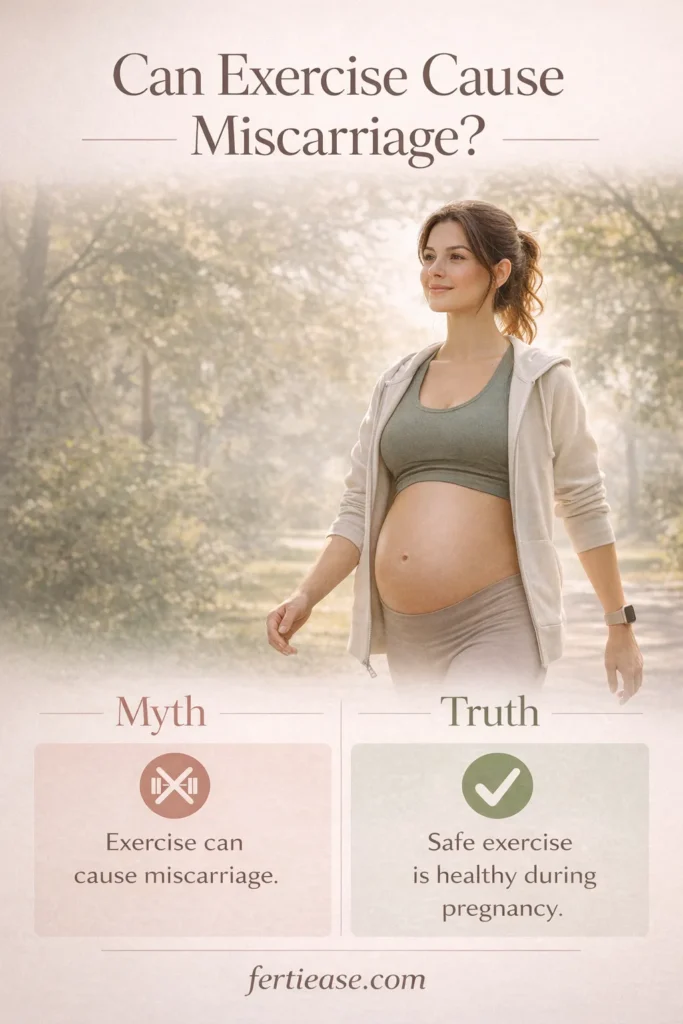
Can Exercise Cause Miscarriage 7 Powerful Facts Every Pregnant Woman Should Know 2 Fertiease
✅ Final Thoughts
So, can exercise cause miscarriage?
👉 No—normal, pregnancy-safe exercise does not cause miscarriage.
For most women, movement is not a threat—it’s a support system. Staying active responsibly can help you feel stronger, calmer, and more connected to your changing body.
Always follow medical advice specific to your pregnancy, but don’t let fear steal your confidence unnecessarily.
Your body knows how to protect your baby. Trust it.
What is your reaction to this article?

Penelope Smith is a certified fertility wellness coach and passionate advocate for natural conception with over 8 years of experience guiding couples on their TTC journeys. Drawing from her background in holistic nutrition and reproductive health counseling, she empowers women and men through evidence-based strategies, compassionate support, and practical lifestyle insights. A mother of two conceived naturally after her own fertility challenges, Penelope blends science, empathy, and real-world results in her writing. Her articles have helped thousands optimize ovulation, balance hormones, and embrace the emotional side of trying to conceive. Connect with her at hello@fertiease.com
VIEW AUTHOR PROFILE