

- 1. 🌱 What Is the Fertile Window?
- 2. 🧠 Why the “Ovulation Day Only” Myth Is Wrong
- 3. 🗓️ Fertile Window Explained: Day by Day
- 3.1. 🟡 Day -5 (Five Days Before Ovulation)
- 3.2. 🟡 Day -4
- 3.3. 🟢 Day -3
- 3.4. 🟢 Day -2
- 3.5. 🔥 Day -1 (The Day Before Ovulation)
- 3.6. 🔥 Ovulation Day (Day 0)
- 3.7. 🔴 Day +1 (After Ovulation)
- 4. 🧠 Which Days Matter Most?
- 5. 📅 How Long Is the Fertile Window Really?
- 6. ⚠️ Why Apps Often Get the Fertile Window Wrong
- 7. 🧪 Best Ways to Identify Your Fertile Window
- 8. 💛 How Often Should You Have Sex During the Fertile Window?
- 9. 🚫 Common Fertile Window Mistakes
- 10. 🌿 Supporting a Healthy Fertile Window
- 11. 🩺 When to Get Help
- 12. 🔗 Internal Links (Fertility & Conception Hub)
- 13. 🧠 Final Thoughts
Fertile Window Explained Day By Day When Pregnancy Is Most Likely Fertiease
If you’re trying to conceive (TTC), understanding the fertile window is far more important than focusing on a single “ovulation day.” Many people miss their chance simply because they don’t realize how fertility works day by day.
Here’s the truth:
👉 You are fertile for several days each cycle—not just one.
In this guide, you’ll get a clear, day-by-day explanation of the fertile window, what’s happening hormonally, which days matter most, and how to time intercourse without stress or confusion.

🌱 What Is the Fertile Window?
The fertile window is the span of days during your menstrual cycle when pregnancy is possible.
It includes:
the 5 days before ovulation
ovulation day itself
Why this window exists:
Sperm can survive up to 5 days in fertile cervical mucus
The egg survives about 12–24 hours after ovulation
That’s why sex before ovulation is often more effective than sex on ovulation day.
🧠 Why the “Ovulation Day Only” Myth Is Wrong
Many people believe:
“If I miss ovulation day, I missed my chance.”
In reality:
Most pregnancies happen from intercourse 1–3 days before ovulation
Waiting for ovulation day alone often means you’re already late
📌 Related read:
👉 Ovulation Symptoms: How to Know You’re Fertile
🗓️ Fertile Window Explained: Day by Day
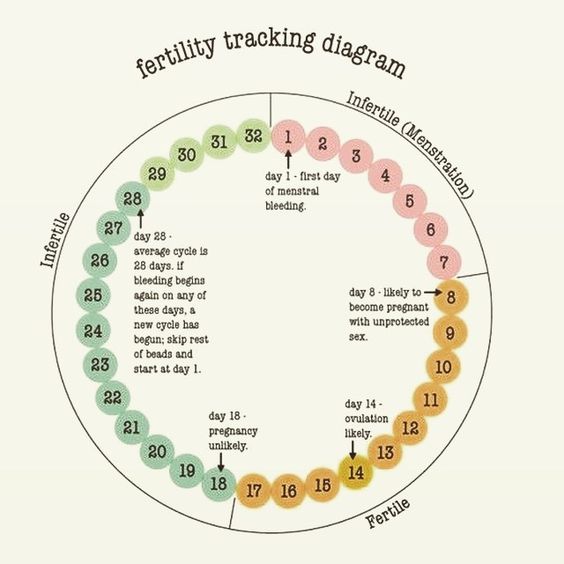
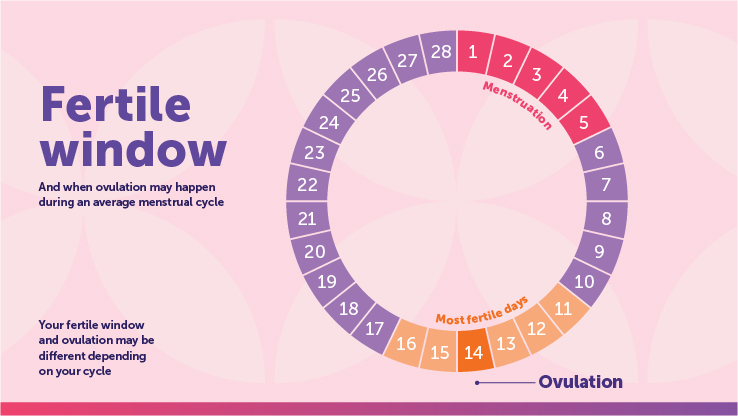

Below is a realistic, biological breakdown of the fertile window.
(We’ll assume ovulation happens on Day 14 for illustration—but remember, this varies.)
🟡 Day -5 (Five Days Before Ovulation)
Fertility level: Low → Rising
What’s happening:
Estrogen begins to rise
Cervical mucus may feel sticky or creamy
Sperm can survive if conditions improve
Good to know:
Intercourse here can still lead to pregnancy
Especially if ovulation happens earlier than expected
🟡 Day -4
Fertility level: Moderate
What’s happening:
Cervical mucus becomes wetter
Sperm survival improves
Body prepares for ovulation
This is a good day to start timing intercourse, especially if cycles are unpredictable.
🟢 Day -3
Fertility level: High
What’s happening:
Estrogen peaks
Cervical mucus becomes slippery
Sperm can survive easily
👉 This is one of the most fertile days of the entire cycle.
Many conceptions happen from sex on this day.
🟢 Day -2
Fertility level: Very High
What’s happening:
Egg-white cervical mucus appears
Cervix is open, soft, and high
Sperm transport is optimal
👉 If you see clear, stretchy mucus, you are highly fertile right now.
📌 This is often the best day for conception.
🔥 Day -1 (The Day Before Ovulation)
Fertility level: Peak
What’s happening:
Ovulation is imminent
LH surge usually occurs
Egg will be released soon
This is statistically the single most fertile day for many people.
If intercourse happens today, sperm are waiting when the egg is released.
🔥 Ovulation Day (Day 0)
Fertility level: Moderate → Declining
What’s happening:
Egg is released
Egg lives ~12–24 hours
Important:
You can get pregnant today
But timing is tight
Fertility drops quickly after ovulation
Ovulation day is not the only important day—and often not the best one.
🔴 Day +1 (After Ovulation)
Fertility level: Very Low
What’s happening:
Egg is no longer viable
Progesterone rises
Cervical mucus dries up
Intercourse today is unlikely to result in pregnancy.
🧠 Which Days Matter Most?
If we rank fertile days by likelihood:
🥇 Day -2 & Day -1
🥈 Day -3
🥉 Day 0 (Ovulation day)
That’s why focusing on the days before ovulation is so powerful.
📅 How Long Is the Fertile Window Really?
For most people:
5–6 days total
Quality matters more than quantity
You don’t need daily sex for two weeks—smart timing wins.
⚠️ Why Apps Often Get the Fertile Window Wrong
Fertility apps usually:
assume ovulation is Day 14
rely on past cycle averages
ignore real-time hormone changes
Problems:
stress
illness
travel
coming off birth control
can shift ovulation by days.
📌 Related read:
👉 Coming Off Birth Control: How Long Until Fertility Returns?
Your body is more accurate than your app.
🧪 Best Ways to Identify Your Fertile Window
Combine body signs + tools:
✔ Cervical mucus (most important)
✔ Ovulation predictor kits (LH surge)
✔ Basal body temperature (confirmation)
✔ Cycle tracking over time
📌 Related read:
👉 Signs Ovulation Is Returning After Birth Control
💛 How Often Should You Have Sex During the Fertile Window?
Best approach:
every 1–2 days during fertile window
especially on days with egg-white mucus
Daily sex is optional—not required.
Consistency beats pressure.
🚫 Common Fertile Window Mistakes
❌ Waiting for ovulation pain
❌ Relying only on apps
❌ Starting too late
❌ Over-timing to the point of stress
❌ Assuming regular periods = fixed ovulation
📌 Related read:
👉 Fertility Myths vs Reality (Evidence-Based)
🌿 Supporting a Healthy Fertile Window
Clear fertile signs depend on:
hormone balance
good nutrition
hydration
sleep
low chronic stress
📌 Related reads:
👉 Foods That Support Fertility Naturally
👉 How to Improve Egg Quality Naturally
🩺 When to Get Help
Consider professional guidance if:
you never notice fertile mucus
ovulation signs are inconsistent
cycles are very irregular
TTC for 12 months (6 months if 35+)
Earlier clarity = less frustration.
🔗 Internal Links (Fertility & Conception Hub)
👉 Ovulation Symptoms: How to Know You’re Fertile
👉 Trying to Conceive After 35: What Changes?
👉 Low AMH: Can You Still Get Pregnant?
👉 How Long Should You Take Supplements Before TTC?
🧠 Final Thoughts
So—fertile window explained, day by day:
👉 It’s not one day
👉 It’s a biological window
👉 The days before ovulation matter most
When you understand your fertile window, TTC becomes clearer, calmer, and more effective.
Fertility isn’t about perfect timing.
It’s about informed timing.
Learn the rhythm, trust your body, and let knowledge replace guesswork.
What is your reaction to this article?

Penelope Smith is a certified fertility wellness coach and passionate advocate for natural conception with over 8 years of experience guiding couples on their TTC journeys. Drawing from her background in holistic nutrition and reproductive health counseling, she empowers women and men through evidence-based strategies, compassionate support, and practical lifestyle insights. A mother of two conceived naturally after her own fertility challenges, Penelope blends science, empathy, and real-world results in her writing. Her articles have helped thousands optimize ovulation, balance hormones, and embrace the emotional side of trying to conceive. Connect with her at hello@fertiease.com
VIEW AUTHOR PROFILE