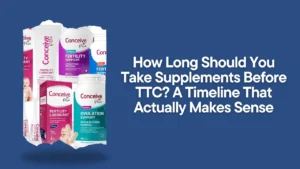

- 1. 1. Start With a Quality Prenatal: Your Non-Negotiable Foundation
- 2. 2. CoQ10: The Supplement Women in Their 30s Rely On
- 3. 3. Omega-3s: The Hormone-Friendly Fat
- 4. 4. Vitamin D: The Silent Fertility Factor Most Women Miss
- 5. 5. Inositol: The Game-Changer for Irregular Cycles
- 6. 6. Magnesium Glycinate: The TTC “Calm Your Hormones” Supplement
- 7. 7. Iron or Ferritin Support (Only If Needed)
- 8. A Simple but Powerful TTC Supplement Routine
- 9. Bonus: Early Pregnancy Symptoms Before a Missed Period
- 10. Final Thoughts: Your TTC Journey Doesn’t Need to Be Complicated
Trying to conceive (TTC) is one of those journeys that combines excitement, curiosity, and—let’s be honest—a little bit of panic. The moment you decide you’re ready, you want your body to be just as ready. You start noticing every symptom, Googling every question at 2 a.m., and searching for anything that might give you even the smallest advantage.
That’s where TTC vitamins and fertility supplements come in. The challenge?
There are hundreds of options, and every bottle claims to boost fertility, balance hormones, or “support reproductive wellness.”
So which ones actually matter?


This guide breaks down the supplements that real women and real fertility experts continually rely on—not the trendy ones, not the miracle claims, but the nutrients with consistent, helpful roles in reproductive health.
Let’s get into it.
1. Start With a Quality Prenatal: Your Non-Negotiable Foundation
Before anything else, build your routine around a solid prenatal vitamin. A good prenatal is like preparing the soil before planting—it sets the stage for healthy conception.
A strong prenatal should include:
Methylated folate (not folic acid)
Better absorbed and supports early embryonic development.Vitamin B12
Important for energy and cell development.Iodine
Supports thyroid function—which plays a major role in ovulation.Iron
Helps with oxygen transport but should only be used if needed.Choline
Often overlooked but essential for fetal brain development.
If a supplement has these five, you’re off to a strong start.
2. CoQ10: The Supplement Women in Their 30s Rely On
If you’ve been part of any TTC community, you’ve seen CoQ10 mentioned—especially for women over 30.
Why?
CoQ10 supports energy production in cells, including egg cells. And eggs need a LOT of energy to mature properly. Think of it as keeping your ovarian “battery” fully charged.
Most women use the Ubiquinol form because it’s more easily absorbed.
If you’re in your late 20s to early 40s and actively trying, this is one supplement worth considering.
3. Omega-3s: The Hormone-Friendly Fat
Omega-3 fatty acids play a quiet but powerful role in fertility:
They help regulate hormones
Reduce inflammation
Support cervical mucus quality
Improve cell membranes in eggs
And support early implantation
If your diet doesn’t include fatty fish regularly, an omega-3 supplement can make a noticeable difference in how your body feels during your cycle.
4. Vitamin D: The Silent Fertility Factor Most Women Miss
More than 40% of women in the U.S. are low in Vitamin D without realizing it.
And low D levels are linked to:
Irregular cycles
Poor ovulation
Luteal phase issues
Mood swings
Higher inflammation
You may not “feel” low Vitamin D, but your hormones certainly do.
Many TTC women add a simple D3 supplement and notice improvements in energy, mood, and cycle predictability.
5. Inositol: The Game-Changer for Irregular Cycles
If your cycle is unpredictable—or you have symptoms of PCOS—Myo-Inositol and D-Chiro Inositol can be incredibly helpful.
They support:
More regular ovulation
Balanced hormones
Improved insulin sensitivity
Better egg quality
Reduced cycle-related anxiety
Many women who haven’t ovulated consistently for months suddenly see more predictable cycles after adding Inositol.
6. Magnesium Glycinate: The TTC “Calm Your Hormones” Supplement
Trying to conceive can be stressful. Magnesium doesn’t boost fertility directly, but it helps your body function in a fertile state.
It improves:
Sleep
Muscle relaxation
PMS symptoms
Mood
Stress response
Cortisol regulation
A calm, well-rested body is biologically more ready for conception.
7. Iron or Ferritin Support (Only If Needed)
Iron deficiency can affect ovulation and energy levels.
But here’s the key: do not supplement blindly.
Some women need iron, some don’t. A simple ferritin blood test gives the answer.
If your levels are low, iron can help with:
energy
cycle strength
luteal phase stability
overall fertility
If they’re normal, avoid extra iron—it can cause more harm than good.
A Simple but Powerful TTC Supplement Routine
Most women don’t need 12 bottles on their counter. Start with a strong core:
Daily essentials:
A high-quality prenatal
Omega-3
Vitamin D3
Magnesium at night
If over 30 or egg quality is a concern:
Add CoQ10 (Ubiquinol)
If cycles are irregular / PCOS:
Add Myo-Inositol + D-Chiro
That’s it.
Clean, simple, effective.
Bonus: Early Pregnancy Symptoms Before a Missed Period
Since TTC supplements often overlap with early pregnancy journeys, many women want to know what to watch for before a missed period.
Some women notice:
mild cramping
increased fatigue
breast sensitivity
slight nausea
emotional shifts
changes in appetite
an unusual sense of calm or warmth
These symptoms are vague and can mimic PMS—but when they appear together, some women see them as early implantation signals.
Still, the only reliable indicator is a positive test. Symptoms alone aren’t enough to confirm pregnancy.
Final Thoughts: Your TTC Journey Doesn’t Need to Be Complicated
Supplements don’t replace medical evaluation, but they can support your cycle, hormones, and overall reproductive health in ways many women genuinely feel.
The key is choosing purpose-driven supplements, not random bottles from TikTok or Pinterest.
Your TTC journey is personal, emotional, and sometimes unpredictable—
but nourishing your body with the right nutrients gives you a strong foundation and a sense of control during an uncertain time.
What is your reaction to this article?

Penelope Smith is a certified fertility wellness coach and passionate advocate for natural conception with over 8 years of experience guiding couples on their TTC journeys. Drawing from her background in holistic nutrition and reproductive health counseling, she empowers women and men through evidence-based strategies, compassionate support, and practical lifestyle insights. A mother of two conceived naturally after her own fertility challenges, Penelope blends science, empathy, and real-world results in her writing. Her articles have helped thousands optimize ovulation, balance hormones, and embrace the emotional side of trying to conceive. Connect with her at hello@fertiease.com
VIEW AUTHOR PROFILE