
- 1. 🌱 Why Ovulation Is Required for Pregnancy
- 2. 🧠 Why This Question Is So Common
- 3. 🧬 Can You Get Pregnant Without Ovulation? (Explained Simply)
- 3.1. Short Answer
- 3.2. Important Clarification
- 4. 🔄 What Is Anovulation?
- 5. ⚠️ Signs You May Not Be Ovulating Regularly
- 6. 🧠 Can You Ovulate Without a Period?
- 7. 🩺 Common Reasons Ovulation Doesn’t Happen
- 7.1. 1️⃣ Polycystic Ovary Syndrome (PCOS)
- 7.2. 2️⃣ Coming Off Birth Control
- 7.3. 3️⃣ High Stress or Under-Eating
- 7.4. 4️⃣ Thyroid or Hormonal Imbalances
- 7.5. 5️⃣ Perimenopause or Diminished Ovarian Reserve
- 8. 🧪 How to Confirm Whether You’re Ovulating
- 9. 💛 If You’re Not Ovulating, What Can You Do?
- 9.1. 🌿 Lifestyle Support
- 9.2. 💊 Supplements (With Guidance)
- 9.3. 🩺 Medical Support
- 10. 🚫 Common Myths (Quick Debunk)
- 11. 🧠 Can You Get Pregnant If You Ovulate Rarely?
- 12. 🩺 When to Seek Help
- 13. 🔗 Internal Links (Fertility & Conception Hub)
- 14. 🧠 Final Thoughts
Can You Get Pregnant Without Ovulation The Clear Science Based Answer Fertiease
If you’re trying to conceive (TTC) and your cycles feel irregular—or you’re unsure whether you ovulate—you might be asking a crucial question:
Can you get pregnant without ovulation?
The clear, science-based answer is:
👉 No—pregnancy cannot occur without ovulation.
But here’s the part that often causes confusion: many people think they’re not ovulating when they actually are, or they ovulate irregularly. Understanding the difference can change how you approach TTC.

In this guide, we’ll explain why ovulation is essential, common misconceptions, conditions that affect ovulation, and what to do if ovulation isn’t happening consistently.
🌱 Why Ovulation Is Required for Pregnancy
Ovulation is the release of a mature egg from the ovary. Pregnancy requires three things to happen in the correct order:
1️⃣ Ovulation releases an egg
2️⃣ Sperm fertilizes the egg
3️⃣ The embryo implants in the uterus
Without an egg, there is nothing to fertilize—no matter how often you have sex or how healthy sperm are.
👉 No ovulation = no egg = no pregnancy.
🧠 Why This Question Is So Common
Many people ask this because:
they have irregular periods
ovulation signs are unclear
cycles vary month to month
apps give confusing predictions
they’ve been TTC without success
The confusion usually isn’t about biology—it’s about detecting ovulation accurately.
🧬 Can You Get Pregnant Without Ovulation? (Explained Simply)


Short Answer
❌ No, pregnancy cannot happen without ovulation.
Important Clarification
You can:
have a period without ovulating
have irregular bleeding that looks like a period
ovulate without obvious symptoms
This is why ovulation status is often misunderstood.
🔄 What Is Anovulation?
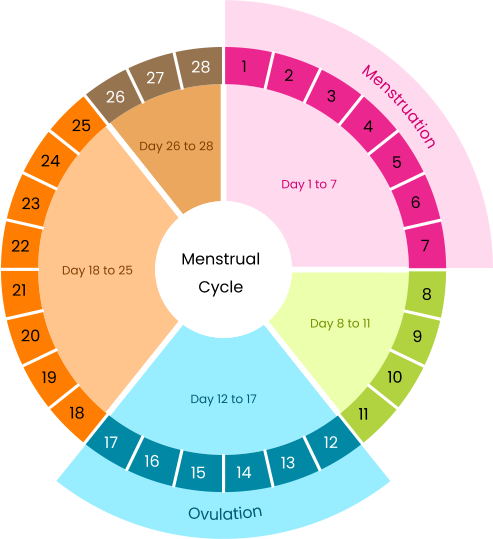
Anovulation means ovulation does not occur during a cycle.
When this happens:
no egg is released
fertilization is impossible
pregnancy cannot occur in that cycle
Anovulation can happen:
occasionally (normal for many people)
chronically (needs attention)
⚠️ Signs You May Not Be Ovulating Regularly
Common signs include:
very irregular cycles
cycles longer than 35 days
missed periods
no fertile cervical mucus
consistently negative ovulation tests
very short luteal phase
📌 Related read:
👉 Ovulation Symptoms: How to Know You’re Fertile
🧠 Can You Ovulate Without a Period?
Yes—rarely, but it can happen.
Because:
ovulation occurs before a period
the first ovulation after birth control or breastfeeding may not be followed by a period if pregnancy occurs
But generally, regular ovulation leads to regular periods, and irregular periods suggest inconsistent ovulation.
🩺 Common Reasons Ovulation Doesn’t Happen
1️⃣ Polycystic Ovary Syndrome (PCOS)
one of the most common causes
ovulation may be irregular or absent
insulin resistance often involved
Ovulation can still happen—but timing is unpredictable.
2️⃣ Coming Off Birth Control
After stopping hormonal birth control:
ovulation may take time to return
cycles may be irregular temporarily
📌 Related read:
👉 Coming Off Birth Control: How Long Until Fertility Returns?
3️⃣ High Stress or Under-Eating
Chronic stress, extreme dieting, or excessive exercise can:
suppress ovulation
disrupt hormone signaling
Your body needs to feel “safe” to ovulate.
4️⃣ Thyroid or Hormonal Imbalances
Conditions affecting:
thyroid hormones
prolactin
adrenal hormones
can interfere with ovulation.
5️⃣ Perimenopause or Diminished Ovarian Reserve
As ovarian reserve declines:
ovulation may become inconsistent
cycles may shorten or lengthen
📌 Related reads:
👉 Trying to Conceive After 35: What Changes?
👉 Low AMH: Can You Still Get Pregnant?
🧪 How to Confirm Whether You’re Ovulating
The most reliable ways include:
✔ Cervical mucus tracking (egg-white mucus = fertile)
✔ Ovulation predictor kits (LH surge)
✔ Basal body temperature (confirms ovulation after)
✔ Ultrasound monitoring (clinical)
📌 Related read:
👉 Fertile Window Explained (Day by Day)
Apps alone are not sufficient.
💛 If You’re Not Ovulating, What Can You Do?
The good news: many causes of anovulation are treatable or manageable.
🌿 Lifestyle Support
eat enough calories
balance blood sugar
prioritize sleep
reduce chronic stress
avoid extreme exercise
📌 Related read:
👉 Foods That Support Fertility Naturally
💊 Supplements (With Guidance)
Depending on the cause, some people discuss:
prenatal vitamins
vitamin D (if deficient)
myo-inositol (especially with PCOS)
📌 Related read:
👉 TTC Vitamins: What Actually Works?
⚠️ Supplements support ovulation—they don’t replace medical care when needed.
🩺 Medical Support
If ovulation doesn’t return:
hormone testing
cycle monitoring
targeted treatments
can help induce or regulate ovulation.
Seeking help is proactive—not a failure.
🚫 Common Myths (Quick Debunk)
❌ “You can get pregnant anytime”
❌ “Periods always mean ovulation happened”
❌ “Ovulation tests are always accurate”
❌ “More sex fixes ovulation issues”
📌 Related read:
👉 Fertility Myths vs Reality (Evidence-Based)
🧠 Can You Get Pregnant If You Ovulate Rarely?
Yes—but only in cycles where ovulation occurs.
This means:
pregnancy is possible
timing becomes more important
patience and tracking matter
Even infrequent ovulation can lead to pregnancy with the right timing.
🩺 When to Seek Help
Consider professional guidance if:
no ovulation for 3+ months
cycles consistently >35 days
TTC for 12 months (6 months if 35+)
known PCOS or thyroid issues
Early clarity saves time and stress.
🔗 Internal Links (Fertility & Conception Hub)
👉 Ovulation Symptoms: How to Know You’re Fertile
👉 Fertile Window Explained (Day by Day)
👉 How Often Should You Have Sex to Get Pregnant?
👉 How to Improve Egg Quality Naturally
🧠 Final Thoughts
So—can you get pregnant without ovulation?
👉 No. Ovulation is essential.
But many people who think they’re not ovulating actually are—or they ovulate inconsistently.
Understanding ovulation is one of the most empowering steps in TTC.
Fertility isn’t about guessing.
It’s about understanding your body’s signals.
Once ovulation is identified—or supported—everything else becomes clearer.
What is your reaction to this article?

Here is a professional English bio for Dr. Elizabeth Williams, Obstetrician-Gynecologist: Dr. Elizabeth Williams, MD, FACOG, is a board-certified obstetrician-gynecologist with over 15 years of experience providing compassionate, evidence-based women’s healthcare. She earned her medical degree from Johns Hopkins University School of Medicine and completed her residency in Obstetrics and Gynecology at Massachusetts General Hospital, Harvard Medical School, where she served as Chief Resident. Dr. Williams specializes in high-risk pregnancies, minimally invasive gynecologic surgery, adolescent gynecology, and menopause management. Known for her warm bedside manner and clear communication, she is dedicated to empowering her patients through every stage of life, from prenatal care and childbirth to preventive wellness and complex gynecologic conditions. In addition to her clinical practice, Dr. Williams is actively involved in medical education and has published research on preeclampsia, labor induction, and robotic-assisted surgery. She is a Fellow of the American College of Obstetricians and Gynecologists (FACOG) and a member of the Society for Maternal-Fetal Medicine. Patients describe Dr. Williams as “attentive, knowledgeable, and truly caring,” and she is proud to deliver hundreds of babies each year while building long-term relationships with the families she serves. Dr. Williams practices in [City/State] and is affiliated with [Hospital Name]. She welcomes new patients and offers both in-person and telemedicine appointments.
VIEW AUTHOR PROFILE