

- 1. 1. Shortening or Lengthening Menstrual Cycles
- 2. 2. Lighter or Heavier Bleeding Than Usual
- 3. 3. Reduced Cervical Mucus Around Ovulation
- 4. 4. Irregular or Absent Ovulation
- 5. 5. Noticeable PMS Worsening or Hormonal Fluctuations
- 6. 6. Increased Fatigue or Lowered Energy
- 7. 7. Difficulty Maintaining Stable Weight
- 8. 8. Diminished Libido
- 9. 9. Family History of Early Menopause
- 1. Medical Tests That Detect Early Fertility Decline
- 1.0.1. ✔ AMH (Anti-Müllerian Hormone)
- 1.0.2. ✔ FSH + Estradiol (Day 3 Testing)
- 1.0.3. ✔ Ultrasound Antral Follicle Count
- 1.0.4. ✔ Thyroid Panel
- 2. When to See a Healthcare Professional
- 3. Doctor’s Insight
Fertility decline is a natural part of a woman’s reproductive journey, yet many women are unaware of the early signs until they actively begin trying to conceive. Understanding these early indicators is not only empowering but also essential for those planning a family in their 30s and 40s.
This guide summarizes the most medically recognized, research-based signs of declining fertility—all explained clearly, professionally, and without unnecessary alarm.
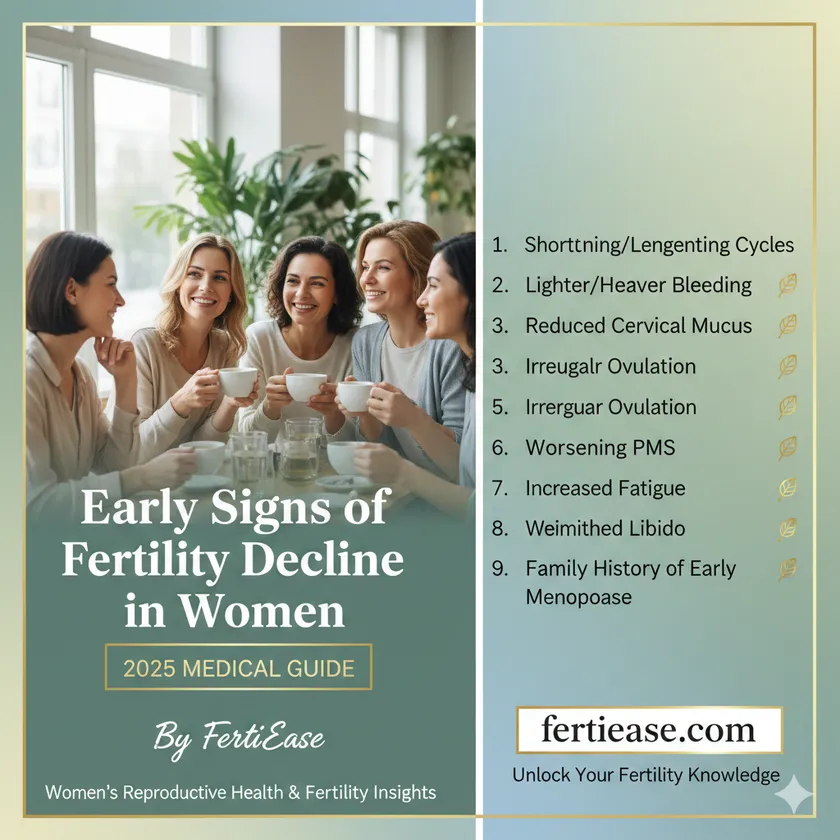
1. Shortening or Lengthening Menstrual Cycles
A healthy menstrual cycle ranges between 24–35 days.
When ovarian reserve begins to decline, many women notice subtle changes:

cycles becoming progressively shorter (e.g., 28 → 25 → 23 days)
cycles lengthening unpredictably
reduced consistency in cycle patterns
Shortening cycles are often associated with early follicular phase changes and declining estrogen levels, while irregular length may indicate inconsistent ovulation.

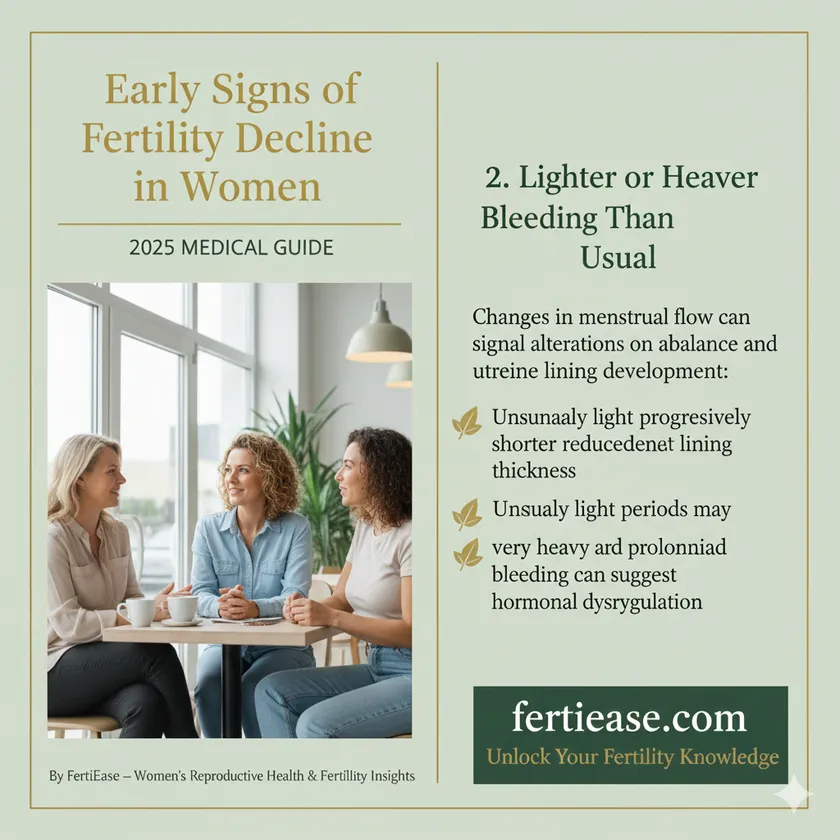
2. Lighter or Heavier Bleeding Than Usual
Changes in menstrual flow can signal alterations in hormonal balance and uterine lining development:
unusually light periods may reflect reduced endometrial thickness
very heavy or prolonged bleeding can suggest hormonal dysregulation
Although cycle variations can occur occasionally, repeated changes over several months deserve attention.
3. Reduced Cervical Mucus Around Ovulation
Egg-white cervical mucus (EWCM) supports sperm transport.
A noticeable decrease in EWCM—especially if previously present—may indicate:
reduced estrogen levels
disrupted ovulatory patterns
overall lower reproductive hormone activity
Many patients describe this as “my fertile signs are less obvious than before.”

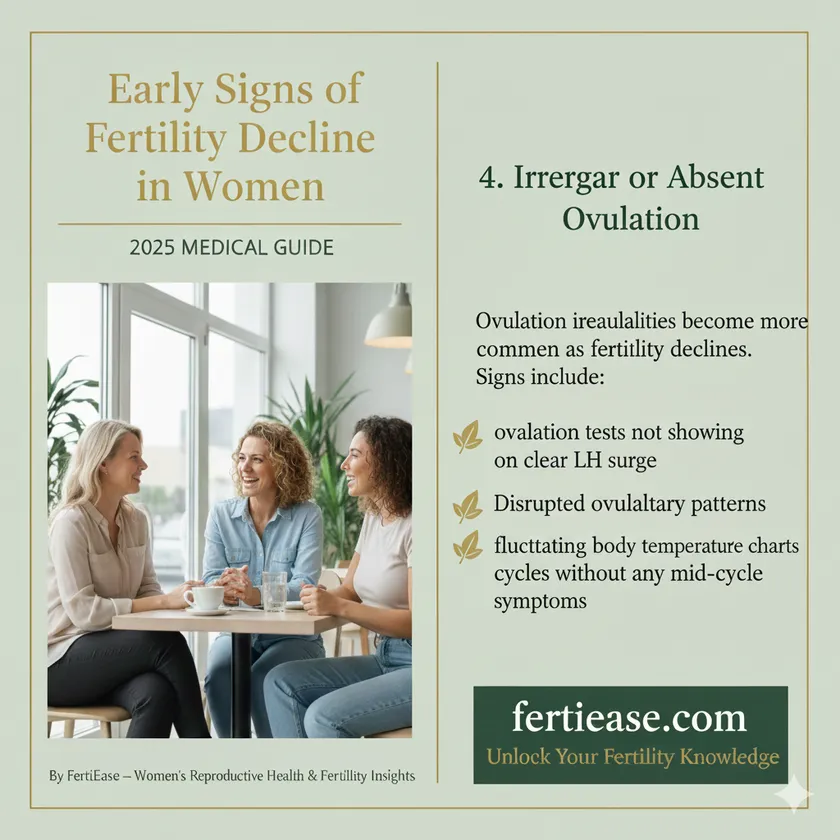
4. Irregular or Absent Ovulation
Ovulation irregularities become more common as fertility declines. Signs include:
ovulation tests not showing a clear LH surge
fluctuating basal body temperature charts
cycles without any mid-cycle symptoms
Irregular ovulation can be related to ovarian aging, thyroid disturbances, stress, or metabolic changes.
Early identification is crucial because consistent ovulation is the foundation of natural conception.
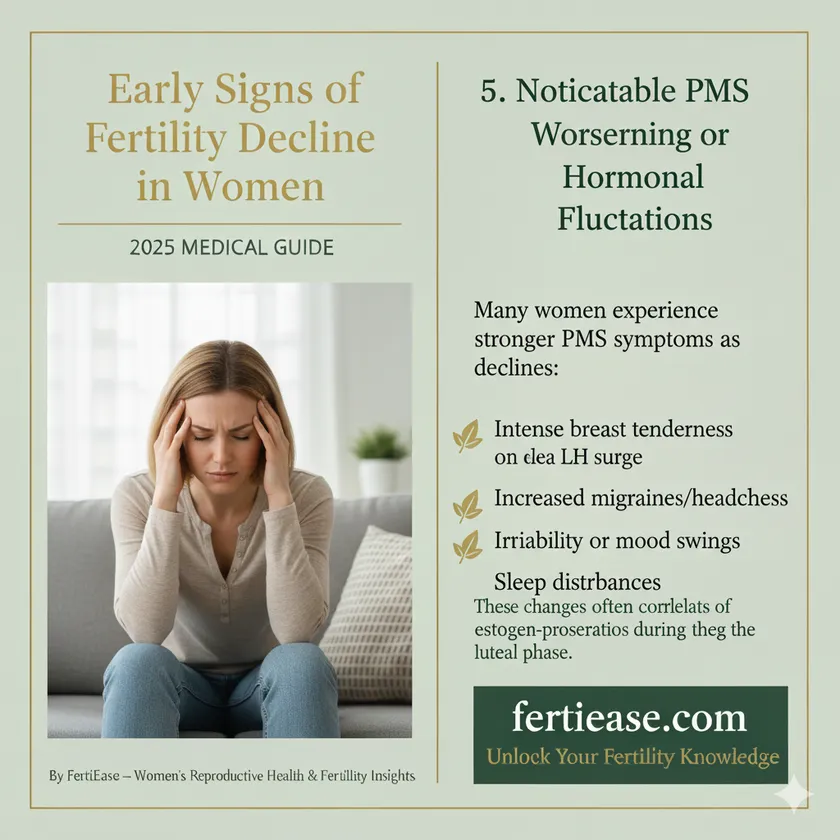
5. Noticeable PMS Worsening or Hormonal Fluctuations
Many women experience stronger PMS symptoms as fertility declines:
breast tenderness becoming more intense
migraines or headaches increasing
irritability or mood swings
sleep disturbances
bloating or water retention
These changes often correlate with shifts in estrogen-progesterone ratios during the luteal phase.
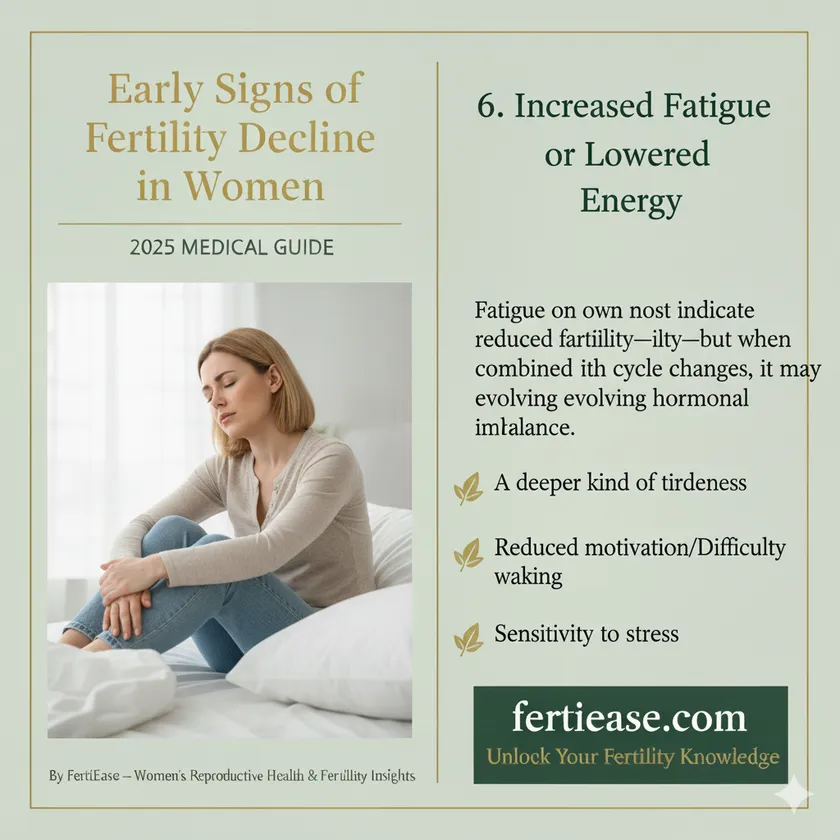
6. Increased Fatigue or Lowered Energy
Fatigue on its own does not indicate reduced fertility—but when combined with cycle changes, it may reflect evolving hormonal imbalance.
Women often describe:
“a deeper kind of tiredness”
reduced motivation
difficulty waking up
sensitivity to stress
Hormonal declines can impact thyroid function, adrenal balance, and luteal phase stability.
7. Difficulty Maintaining Stable Weight
As estrogen decreases, metabolism becomes slightly less efficient. Some women experience:
gradual weight gain despite consistent habits
increased abdominal fat
difficulty losing weight
carbohydrate sensitivity
Metabolic shifts are often early indicators of ovarian aging and reduced hormone output.

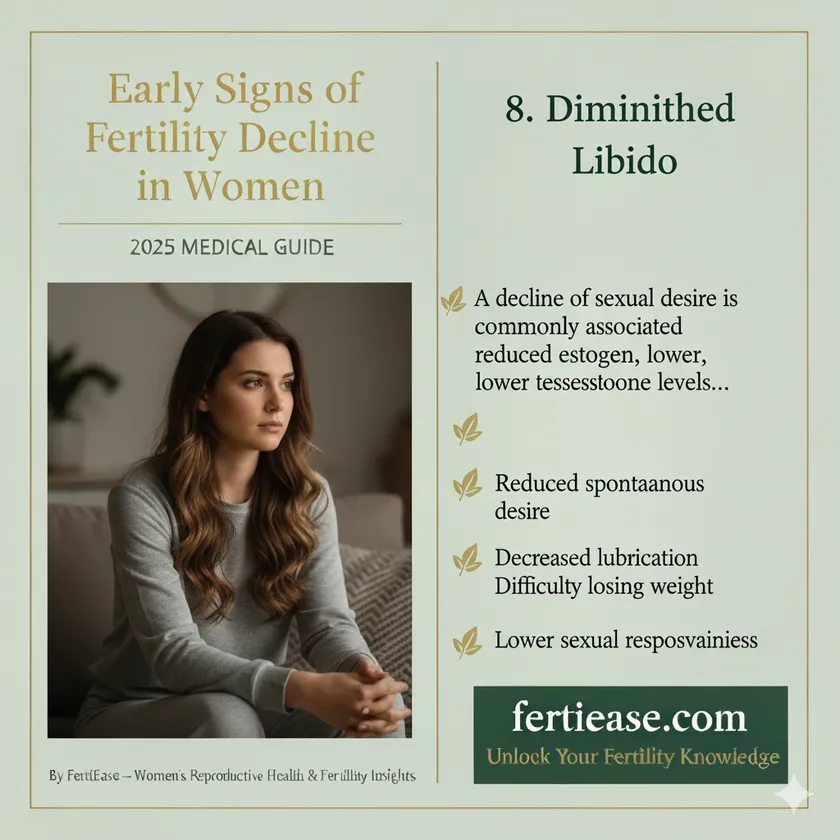
8. Diminished Libido
A decline in sexual desire is commonly associated with reduced estrogen, lower testosterone levels, or chronic stress—all of which become more prevalent as fertility begins to decrease.
Women may notice:
reduced spontaneous desire
decreased lubrication
lower sexual responsiveness
Although libido is multi-factorial, hormonal contribution is well documented.
9. Family History of Early Menopause
Genetics play a significant role.
If your mother, aunt, or sister experienced perimenopause before age 45, your risk of earlier fertility decline increases.
This doesn’t guarantee reduced fertility—but it provides an important context for planning.

Medical Tests That Detect Early Fertility Decline
If you notice persistent symptoms, the following clinical tests offer valuable insight:
✔ AMH (Anti-Müllerian Hormone)
Indicates ovarian reserve. Lower levels may reflect reduced egg quantity.
✔ FSH + Estradiol (Day 3 Testing)
Higher FSH or altered E2 levels can indicate early ovarian aging.
✔ Ultrasound Antral Follicle Count
Shows how many follicles are present at the start of a cycle.
✔ Thyroid Panel
Thyroid dysfunction can mimic fertility decline symptoms.
Testing does not diagnose infertility—but it helps create a clearer reproductive picture.
When to See a Healthcare Professional
You should consider medical evaluation if:
cycles consistently fall below 24 or above 35 days
ovulation appears absent for several cycles
AMH is lower than expected for age
you’re over 35 and trying for more than 6 months
you have a known reproductive condition
Early guidance can significantly improve fertility outcomes.
Doctor’s Insight
“Fertility rarely declines suddenly. In most cases, the signs begin gradually—cycle changes, ovulation irregularity, or subtle hormonal shifts. Recognizing these early patterns allows women to make informed decisions long before fertility becomes a time-sensitive challenge.”
— Dr. Caroline Hughes, Reproductive Endocrinologist
What is your reaction to this article?

Penelope Smith is a certified fertility wellness coach and passionate advocate for natural conception with over 8 years of experience guiding couples on their TTC journeys. Drawing from her background in holistic nutrition and reproductive health counseling, she empowers women and men through evidence-based strategies, compassionate support, and practical lifestyle insights. A mother of two conceived naturally after her own fertility challenges, Penelope blends science, empathy, and real-world results in her writing. Her articles have helped thousands optimize ovulation, balance hormones, and embrace the emotional side of trying to conceive. Connect with her at hello@fertiease.com
VIEW AUTHOR PROFILE