
- 1. 1. Mild Cramping (Usually 6–10 DPO)
- 2. 2. Light Spotting or “Implantation Bleeding”
- 3. 3. Increase in Basal Body Temperature
- 4. 4. Unusual Fatigue
- 5. 5. Increased Urination (Not Frequent Urination Yet)
- 6. 6. Heightened Sense of Smell or Taste Changes
- 7. 7. Emotional Sensitivity or Mood Shifts
- 8. When Should You Test? (Realistic Timeline)
- 9. When to Seek Medical Advice
- 10. Doctor’s Insight
Implantation marks one of the earliest steps of pregnancy—long before a missed period or a positive test. While not every woman experiences symptoms, certain subtle changes can occur when the fertilized egg attaches to the uterine lining.
Understanding these early signs can help women make sense of the “two-week wait,” one of the most emotionally charged periods in the conception journey.
This guide examines the scientifically recognized early implantation symptoms, explained from a clinical and physiological perspective.


1. Mild Cramping (Usually 6–10 DPO)
Implantation cramping is one of the most frequently reported early signs.
Women describe it as:
light pulling
slight pressure
mild, short waves of cramping
Unlike menstrual cramps, implantation discomfort is typically brief and less intense.
These sensations occur when the embryo embeds into the endometrial lining, a process that may cause subtle uterine activity.
However, cramping alone is not a definitive indicator of pregnancy—stress, hormones, and cycle variations can also cause similar sensations.

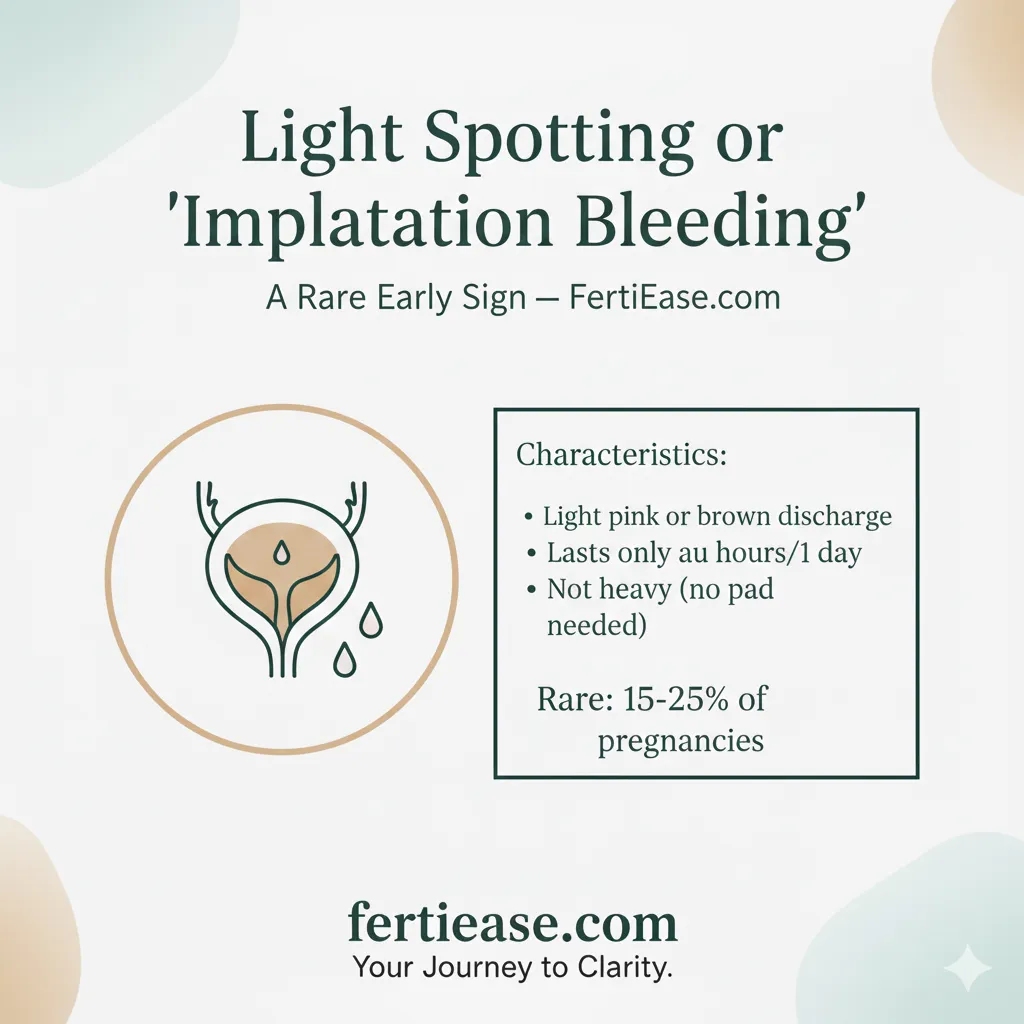
2. Light Spotting or “Implantation Bleeding”
Implantation bleeding is real, but it is rare, occurring in an estimated 15–25% of pregnancies.
Characteristics:
light pink or brown discharge
lasts only a few hours or 1 day
not heavy enough to require a pad
It happens when small blood vessels in the uterine lining break during the implantation process.
Heavy or bright red bleeding is not typical of implantation and may signal upcoming menstruation instead.
3. Increase in Basal Body Temperature
Women tracking BBT may notice:
a sustained temperature rise
a “triphasic” pattern—an additional rise after ovulation
This is thought to reflect progesterone changes associated with early pregnancy.
While not a guaranteed sign, many fertility specialists consider it a meaningful pattern when combined with other symptoms.

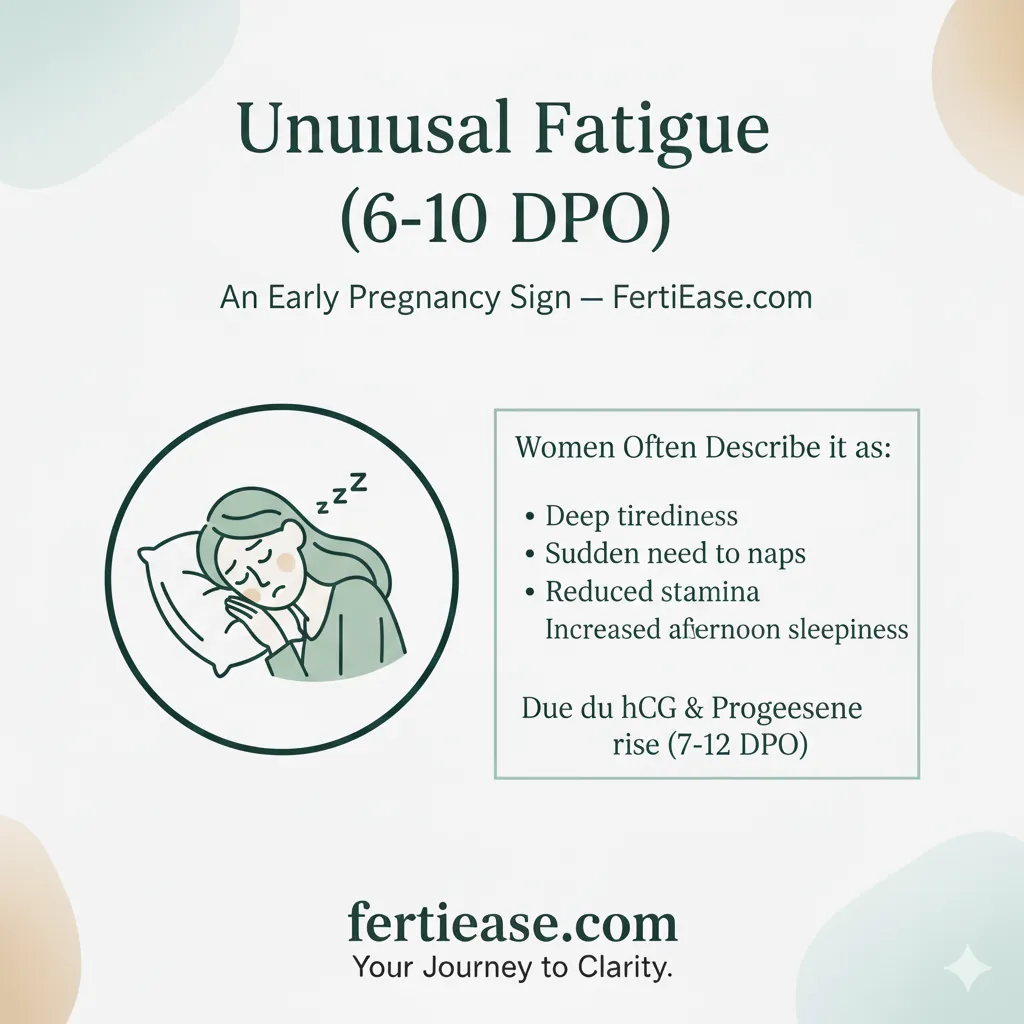
4. Unusual Fatigue
Fatigue is one of the earliest true pregnancy symptoms.
After implantation, the body begins producing hCG and progesterone—two hormones that significantly influence energy levels.
Women often describe this fatigue as:
“deep tiredness”
sudden need for naps
reduced stamina
increased sleepiness in the afternoons
This symptom generally appears between 7–12 DPO, sometimes earlier.
5. Increased Urination (Not Frequent Urination Yet)
Frequent urination caused by hCG usually appears after a positive pregnancy test.
However, in some women, implantation can cause:
mild pelvic awareness
slight pressure on the bladder
subtle increases in urination
This is due to early hormonal shifts and increased blood flow to the pelvic region.

6. Heightened Sense of Smell or Taste Changes
While stronger taste and smell aversions typically appear after a missed period, some women report minor changes shortly after implantation.
Early hormone fluctuations—particularly progesterone—can alter sensory perception even at low levels.
These changes may include:
a sudden dislike for certain foods
mild nausea
increased sensitivity to strong odors
Again, not definitive, but noteworthy when appearing alongside other early symptoms.

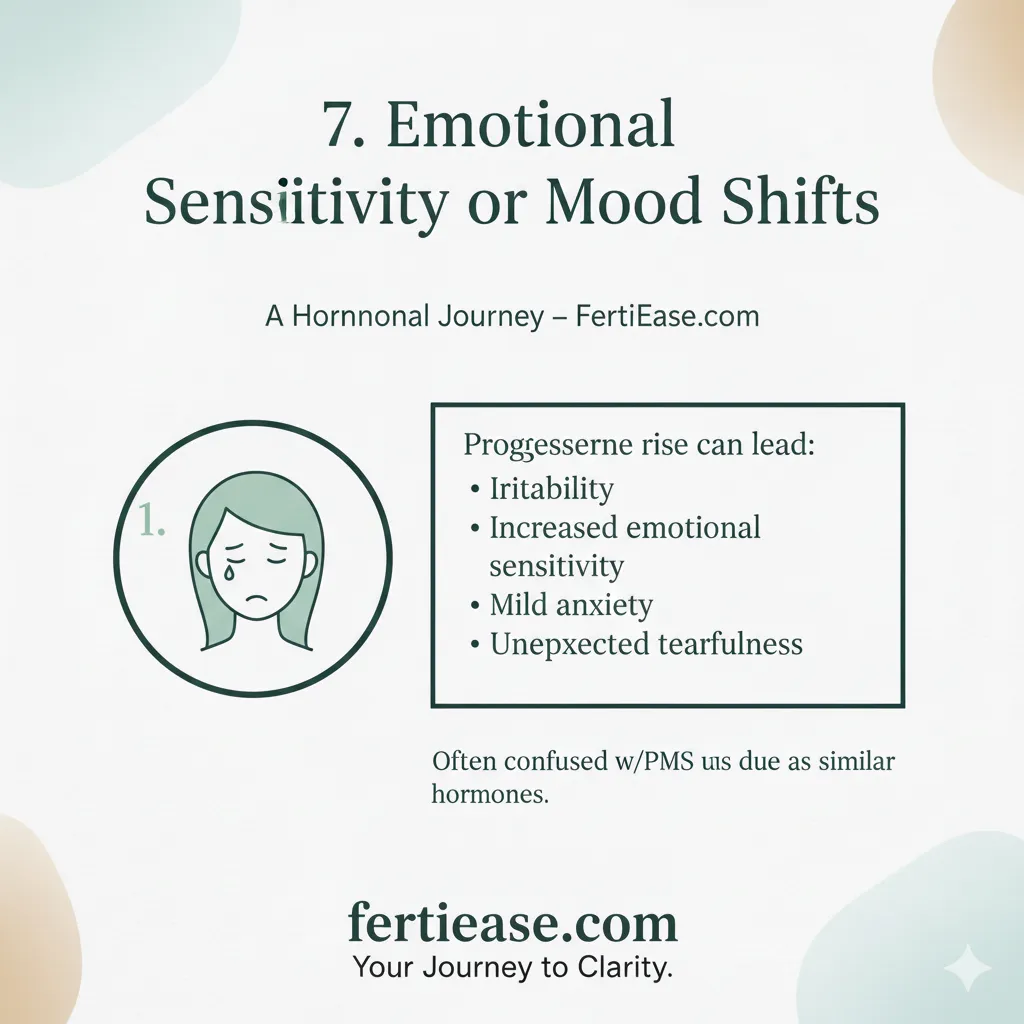
7. Emotional Sensitivity or Mood Shifts
Progesterone rises after ovulation and increases further after implantation.
This can lead to:
irritability
increased emotional sensitivity
mild anxiety
unexpected tearfulness
Many women confuse this with PMS, which is completely understandable—both processes involve similar hormones.
When Should You Test? (Realistic Timeline)
8–10 DPO: early faint positives possible
10–12 DPO: majority of detectable early positives
12–14 DPO: most reliable test window
After missed period: highest accuracy
Testing too early may lead to false negatives simply because hCG has not risen enough.
When to Seek Medical Advice
If symptoms include:
severe pain
heavy bleeding
dizziness
sharp one-sided cramping
You should consult a healthcare professional promptly, as these are not typical signs of implantation.
Doctor’s Insight
“Implantation itself is a microscopic event, and not every woman will notice physical signs. When symptoms do occur, they tend to be mild and short-lasting. The key is observing patterns rather than relying on a single sensation.”
— Dr. Helen Carter, Obstetrics & Reproductive Endocrinology
What is your reaction to this article?

Penelope Smith is a certified fertility wellness coach and passionate advocate for natural conception with over 8 years of experience guiding couples on their TTC journeys. Drawing from her background in holistic nutrition and reproductive health counseling, she empowers women and men through evidence-based strategies, compassionate support, and practical lifestyle insights. A mother of two conceived naturally after her own fertility challenges, Penelope blends science, empathy, and real-world results in her writing. Her articles have helped thousands optimize ovulation, balance hormones, and embrace the emotional side of trying to conceive. Connect with her at hello@fertiease.com
VIEW AUTHOR PROFILE