

- 1.
- 2. What Stress Really Does to the Body
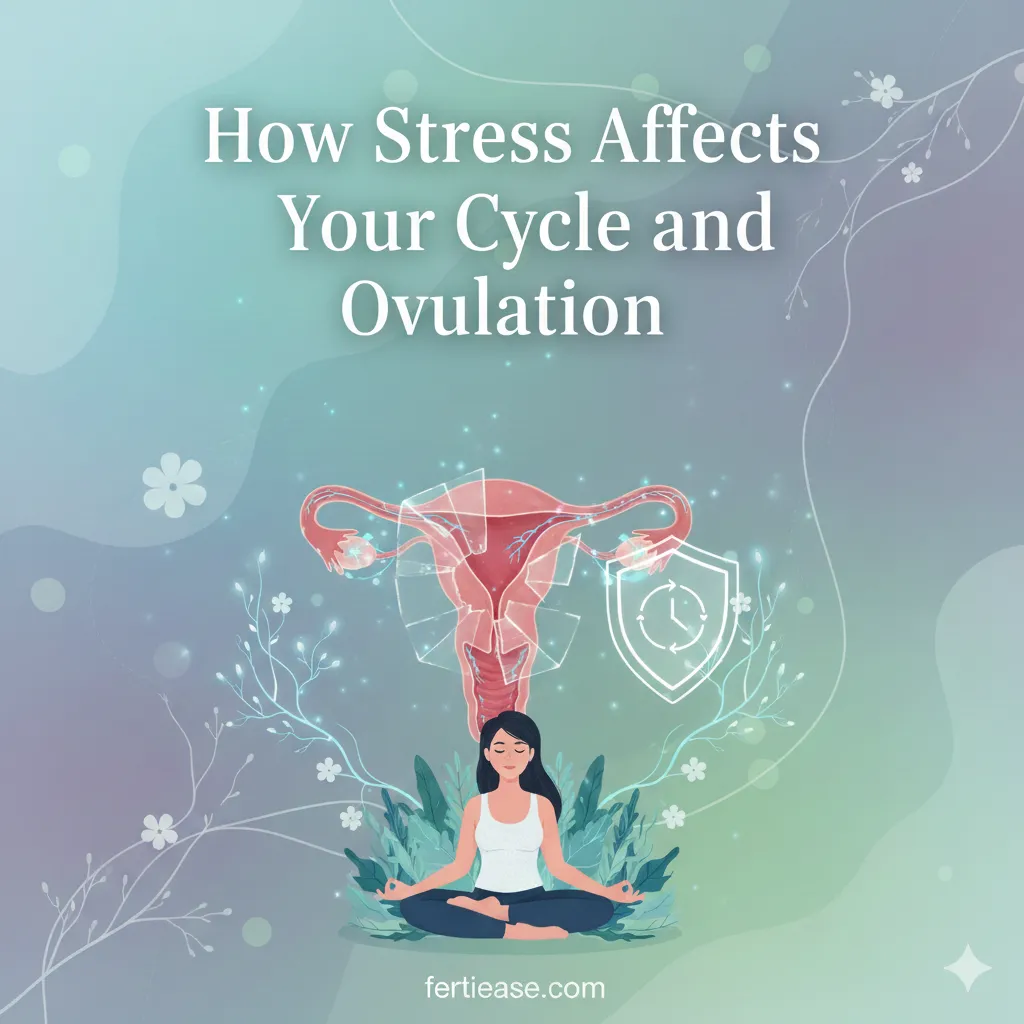
- 3. How Stress Affects Your Cycle and Ovulation
- 3.1. 🌿 1. Delayed or Irregular Ovulation
- 3.2. 🌿 2. Shortened Luteal Phase
- 3.3. 🌿 3. Reduced Libido and Energy
- 3.4. 🌿 4. Compounding Lifestyle Effects
- 4. Can Stress Alone Prevent Pregnancy? (Important Reality Check)
- 5. Science-Backed Ways to Support Fertility During Stress
- 5.1. ✔️ 1. Regulate Cortisol Through Sleep Hygiene
- 5.2. ✔️ 2. Walk at Least 20 Minutes a Day
- 5.3. ✔️ 3. Try Breathwork or Mindfulness (Scientifically Proven)
- 5.4. ✔️ 4. Limit Caffeine if You’re Highly Sensitive to Stress
- 5.5. ✔️ 5. Lean on Support Systems
- 6. When to Talk to a Doctor
- 7. Final Thoughts
Trying to conceive (TTC) can be an exciting chapter—but it can also feel like an emotional roller coaster. Many women worry that everyday stress might interfere with their ability to get pregnant. And the truth is… chronic stress can influence reproductive hormones, but not always in the dramatic way social media claims.
This guide breaks down what research actually shows, how stress affects your cycle, and evidence-backed ways to protect your fertility.
What Stress Really Does to the Body
When you experience stress, your body releases cortisol, a hormone designed to help you respond to danger. Short-term stress is normal and harmless.
The challenge begins when cortisol stays high for too long.
According to the American Psychological Association (APA), chronic stress can impact multiple systems in the body, including the endocrine (hormonal) system. Elevated cortisol levels can disrupt natural hormone rhythms that play a role in ovulation, energy balance, and sleep.

But here’s the key:
➡️ Stress rarely causes infertility by itself.
Instead, it creates hormonal ripple effects that can influence your cycle.
How Stress Affects Your Cycle and Ovulation
🌿 1. Delayed or Irregular Ovulation
Chronic stress can interfere with the hypothalamus—the part of your brain that controls hormones like LH and FSH.
Studies published by the National Institutes of Health (NIH) show that high cortisol can lead to:
Late ovulation
Anovulatory cycles (no ovulation)
Slightly longer cycle lengths
This doesn’t mean you “can’t” get pregnant—only that ovulation may be less predictable.
🌿 2. Shortened Luteal Phase
Some research suggests stress may shorten the luteal phase (the time between ovulation and your period), which is important for implantation.
According to the Office on Women’s Health (U.S. Department of Health & Human Services), hormonal imbalances triggered by stress can influence progesterone levels.
A short luteal phase doesn’t guarantee infertility but can make conception timing more challenging.
🌿 3. Reduced Libido and Energy
Physical and emotional fatigue from stress can lower sex drive—just when consistency matters most.
Many couples under TTC stress report decreased intimacy frequency, which naturally reduces conception chances.
🌿 4. Compounding Lifestyle Effects
Stress often leads to habits that indirectly affect fertility, such as:
Poor sleep
Emotional eating
Lower physical activity
Increased caffeine or alcohol
According to the CDC, sleep deprivation alone can disrupt hormone production and menstrual regularity.
Can Stress Alone Prevent Pregnancy? (Important Reality Check)
This is where clarity matters.
👉 Research does NOT support the idea that normal daily stress prevents pregnancy.
You can feel overwhelmed, have a tough week, juggle work—and still conceive.
But high, ongoing stress can affect hormonal balance, ovulation predictability, and cycle quality.
It’s not the stress itself—it’s the long-term cortisol exposure.
Think of it like this:
“Stress won’t shut your fertility off. But it can make the system run less smoothly.”
Science-Backed Ways to Support Fertility During Stress
✔️ 1. Regulate Cortisol Through Sleep Hygiene
Sleep is one of the most powerful natural hormone regulators.
The National Sleep Foundation recommends 7–9 hours for adults trying to conceive.
Tips:
Go to bed at the same time daily
Limit screens 1 hour before sleep
Keep your room dark and cool
✔️ 2. Walk at Least 20 Minutes a Day
Light movement lowers cortisol and boosts blood flow to reproductive organs.
NIH studies show even simple walking reduces stress hormones significantly.
✔️ 3. Try Breathwork or Mindfulness (Scientifically Proven)
A Harvard Medical School study found that deep breathing activates the parasympathetic nervous system—your “fertility-friendly mode.”
Just 5 minutes of slow breathing can reduce cortisol.
✔️ 4. Limit Caffeine if You’re Highly Sensitive to Stress
Research is mixed, but some people experience cortisol spikes from caffeine.
If you notice:
jitters
anxiety
heart racing
…try reducing caffeine during TTC.
✔️ 5. Lean on Support Systems
Talking with a partner, friend, or support group can reduce perceived stress levels.
Emotional health is part of reproductive health.
When to Talk to a Doctor
You should consider speaking with a healthcare provider if you notice:
very irregular cycles
cycles longer than 35 days
no ovulation for multiple months
unusually light or heavy bleeding
difficulty conceiving after 6–12 months (age-dependent)
The American College of Obstetricians and Gynecologists (ACOG) recommends early evaluation if cycles are consistently irregular.
Final Thoughts
Stress is a normal part of life—and TTC doesn’t require a perfectly calm mind.
But taking steps to reduce chronic stress can support hormone balance, improve cycle regularity, and strengthen overall reproductive wellness.
Your fertility is resilient.
You just need to support the system so it can work the way it’s designed to.
What is your reaction to this article?

Hi, I’m Mary! I’m a women’s health educator, certified Fertility Awareness Method (FAM) instructor, and a total cycle nerd who’s been charting my own cycles for over a decade. After ditching hormonal birth control in my mid-20s and realizing how little I actually knew about my body, I dove head-first into the science of natural fertility tracking. What started as a personal experiment turned into a full-on passion: helping women reclaim their cycles, conceive confidently, or avoid pregnancy without side effects. When I’m not geeking out over cervical mucus patterns or BBT charts, you’ll find me sipping herbal tea, tending my (slightly chaotic) houseplant jungle, or walking my rescue dog with a podcast in my ears. I believe knowledge is power, and understanding your cycle is one of the kindest things you can do for yourself. Thanks for being here — let’s decode your body together! 🌿
VIEW AUTHOR PROFILE