
By Dr. Emily Carter, MD, OB-GYN with 15+ years in reproductive medicine. Reviewed by the Fertiease Editorial Board (sources cited).
Trying to conceive (TTC) blends hope and science. As a board-certified obstetrician-gynecologist with over 15 years treating infertility at a leading fertility clinic, I’ve guided thousands through natural conception. This evidence-based guide draws from ACOG, ASRM, and peer-reviewed studies (links below) to boost your odds safely. We’ll cover timing, nutrition, lifestyle, supplements, and more—practical steps grounded in data to empower your journey.
Understanding Your Cycle and Timing Intercourse Precisely
The foundation of TTC success is pinpointing ovulation. An egg is viable for just 12-24 hours post-release, while sperm can live 3-5 days in fertile cervical mucus [1]. This creates a 5-6 day fertile window per cycle.

Start by calculating your cycle length—from day 1 of your period to the next. Average: 28 days, ovulation around day 14. Irregular? Apps help predict.
Proven tracking methods:
- Ovulation Predictor Kits (OPKs): Urine tests detect luteinizing hormone (LH) surge 24-36 hours before ovulation, with over 99% accuracy when used correctly [2].
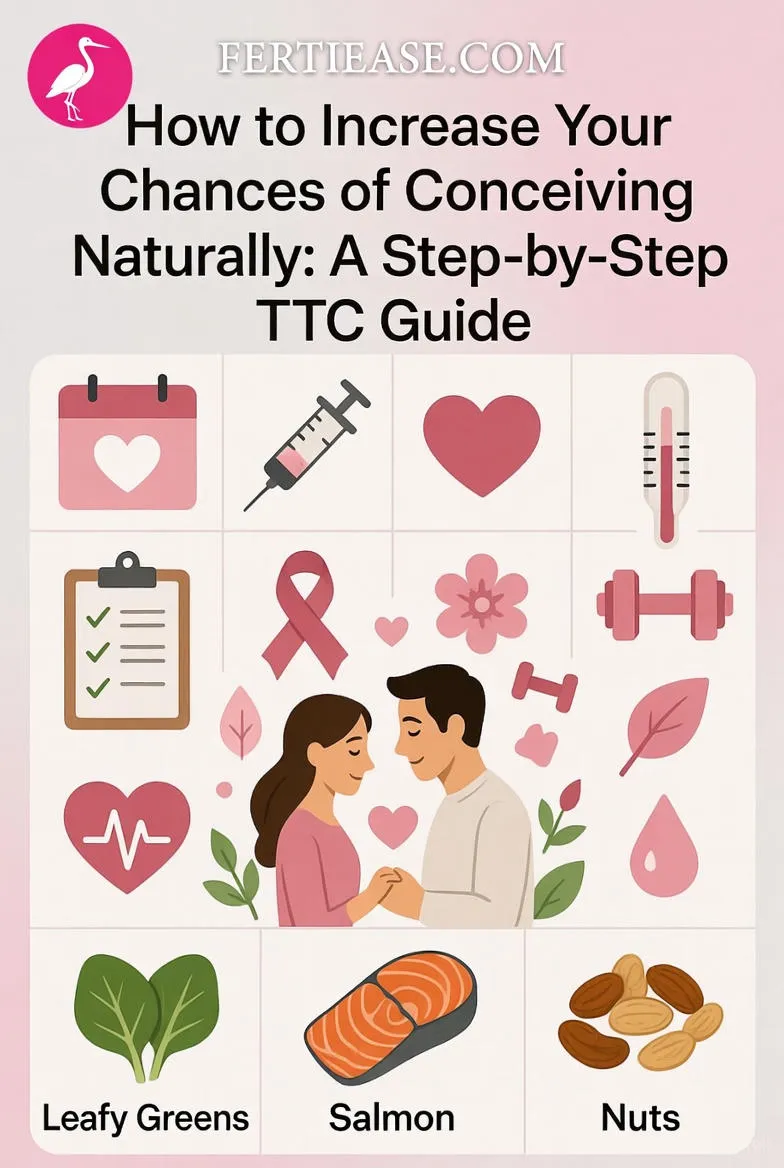
- Basal Body Temperature (BBT): Measure orally upon waking. A sustained rise of 0.4-1.0°F (0.2-0.5°C) confirms ovulation occurred, helping retroactively time next cycle [3].
- Cervical Mucus Monitoring: As estrogen peaks, mucus turns clear, slippery, and stretchy (like raw egg whites)—prime for sperm travel [4].
- Apps and Wearables: Tools like Fertility Friend or Ovia use algorithms validated in clinical studies to predict windows with 89% accuracy [5].
For a 28-day cycle, target intercourse on days 11-16. Have sex every 36-48 hours to maintain optimal sperm quality without depletion. Position? Missionary with a pillow under hips aids gravity, though evidence is limited.

Evidence-Based Nutrition for Fertility Optimization
What you eat directly impacts gamete quality. The Nurses’ Health Study showed Mediterranean-style diets boost conception rates by up to 66% [6].
Key nutrients in a table for clarity:
| Nutrient | Food Sources | Daily Recommendation | Key Benefit & Evidence |
|---|---|---|---|
| Folate | Leafy greens, lentils, avocados | 600 mcg (pregnant/pre-TTC) | Prevents anovulation; reduces risk 40% in deficient women [7] |
| Omega-3 Fatty Acids | Fatty fish (salmon), chia seeds, walnuts | 1-2 g EPA/DHA | Improves egg membrane fluidity and embryo implantation [8] |
| Zinc | Oysters, beef, pumpkin seeds | 11 mg (men), 8 mg (women) | Increases sperm count by 74% in deficient men; supports ovulation [9] |
| Iron | Spinach, red meat, beans | 18 mg (women) | Combats anemia-linked infertility [10] |
| Antioxidants (Vit C/E) | Citrus, almonds, berries | 75-90 mg C; 15 mg E | Protects sperm DNA; reduces oxidative stress [11] |
Avoid pitfalls: Trans fats in fried/processed foods raise infertility hazard ratio to 1.73 [12]. For men, excessive soy phytoestrogens may lower sperm concentration if intake >90 mg/day [13]. Hydrate with 2-3 liters water daily—dehydration impairs mucus quality.
Sample daily meal plan:
- Breakfast: Oatmeal with berries, walnuts, folate-fortified.
- Lunch: Salmon salad with spinach.
- Dinner: Lentil stir-fry with veggies.
- Snacks: Yogurt, nuts.
Lifestyle Factors Backed by Robust Data
Lifestyle tweaks yield measurable gains.
- Exercise: Aim for 150 minutes moderate activity weekly (brisk walking, yoga). A meta-analysis links vigorous exercise (>5 hours/week) to 30% lower IVF success; balance is key [14].
- Sleep: 7-9 hours nightly. Chronic <6 hours reduces conception odds by 20% via disrupted melatonin [15].
- Stress Management: TTC anxiety elevates cortisol, suppressing GnRH. Mindfulness-based programs increase pregnancy rates 55% in 6 months [16]. Try acupuncture—meta-analyses show 1.5x higher rates [17].
- Weight Management: BMI 18.5-24.9 ideal. Obesity cuts odds 10-20%; underweight disrupts hormones [18].
- Environmental Toxins: BPA in plastics lowers sperm motility 23%; phthalates affect hormones [19]. Switch to glass, stainless steel; choose organic produce.
Quit smoking (reduces fertility 30%) and limit alcohol (>14 units/week harms sperm) [20].
Supplements: Proceed with Professional Guidance
Supplements bridge gaps but aren’t substitutes.
- Prenatal Vitamins: 400-800 mcg folic acid daily (CDC guideline) prevents defects [21].
- CoQ10: 200 mg for women 35+ improves oocyte mitochondrial function in RCTs [22].
- For Men: L-carnitine + acetyl-L-carnitine (2g/day) enhances motility [23].
- Others: Inositol for PCOS (improves ovulation 60%) [24]; vitamin D if deficient.
Always consult—excess can cause issues (e.g., high vitamin A teratogenic).
When to Seek Professional Help and Red Flags
Don’t wait indefinitely:
- Under 35: Evaluate after 12 months TTC.
- 35+: After 6 months (ASRM) [25].
- Sooner if: Irregular cycles, painful periods, known endometriosis, or male factors like low libido.
Common culprits: PCOS (affects 10-15% women, treatable with lifestyle/metformin) [26]; male factor (40% cases, e.g., varicocele repair boosts counts 60%) [27].
Tests: Semen analysis, hormone panels, hysterosalpingogram.
Additional Practical Tips for Daily Success
- Intercourse Optimization: Every other day in window; use Pre-Seed lube (pH/sperm-friendly) [28].
- Caffeine: <200 mg/day; excess delays time-to-pregnancy [29].
- Herbs: Red raspberry leaf tones uterus (anecdotal); chasteberry for progesterone [30].
- Partner Communication: Share tracking; reduce pressure.
- Tracking Progress: Journal symptoms; join evidence-based forums.
Natural conception succeeds in 85% within 12 months, 92% by 24 [31]. Patience pays—many conceive after 3-6 months of optimized habits.
If needed, next steps like Clomid (ovulation induction, 80% success) or IUI bridge to parenthood [32].
Stay informed, act consistently, and nurture your relationship. Your family starts here.
References (PubMed/NCBI/ASRM/CDC links):
- https://pubmed.ncbi.nlm.nih.gov/1635999/
- https://pubmed.ncbi.nlm.nih.gov/25015809/
- https://pubmed.ncbi.nlm.nih.gov/6856208/
- https://pubmed.ncbi.nlm.nih.gov/11721239/
- https://pubmed.ncbi.nlm.nih.gov/28872215/
- https://pubmed.ncbi.nlm.nih.gov/20091662/
- https://pubmed.ncbi.nlm.nih.gov/17004991/
- https://pubmed.ncbi.nlm.nih.gov/23852976/
- https://pubmed.ncbi.nlm.nih.gov/8875511/
- https://pubmed.ncbi.nlm.nih.gov/16923289/
- https://pubmed.ncbi.nlm.nih.gov/18650557/
- https://pubmed.ncbi.nlm.nih.gov/16923289/
- https://pubmed.ncbi.nlm.nih.gov/18650557/
- https://pubmed.ncbi.nlm.nih.gov/23682635/
- https://pubmed.ncbi.nlm.nih.gov/28938735/
- https://pubmed.ncbi.nlm.nih.gov/21879995/
- https://pubmed.ncbi.nlm.nih.gov/24745835/
- https://pubmed.ncbi.nlm.nih.gov/23852976/
- https://pubmed.ncbi.nlm.nih.gov/22005209/
- https://pubmed.ncbi.nlm.nih.gov/15863549/
- https://www.cdc.gov/ncbddd/folicacid/recommendations.html
- https://pubmed.ncbi.nlm.nih.gov/23675034/
- https://pubmed.ncbi.nlm.nih.gov/1635999/
- https://pubmed.ncbi.nlm.nih.gov/19551548/
- https://www.asrm.org/topics/topics-index/infertility/
- https://pubmed.ncbi.nlm.nih.gov/29458692/
- https://pubmed.ncbi.nlm.nih.gov/29458692/
- https://pubmed.ncbi.nlm.nih.gov/16169409/
- https://pubmed.ncbi.nlm.nih.gov/16849430/
- https://pubmed.ncbi.nlm.nih.gov/11721239/
- https://pubmed.ncbi.nlm.nih.gov/15863549/
- https://pubmed.ncbi.nlm.nih.gov/25015809/
What is your reaction to this article?

Hi, I’m Mary! I’m a women’s health educator, certified Fertility Awareness Method (FAM) instructor, and a total cycle nerd who’s been charting my own cycles for over a decade. After ditching hormonal birth control in my mid-20s and realizing how little I actually knew about my body, I dove head-first into the science of natural fertility tracking. What started as a personal experiment turned into a full-on passion: helping women reclaim their cycles, conceive confidently, or avoid pregnancy without side effects. When I’m not geeking out over cervical mucus patterns or BBT charts, you’ll find me sipping herbal tea, tending my (slightly chaotic) houseplant jungle, or walking my rescue dog with a podcast in my ears. I believe knowledge is power, and understanding your cycle is one of the kindest things you can do for yourself. Thanks for being here — let’s decode your body together! 🌿
VIEW AUTHOR PROFILE