
- 1. What Counts as an Irregular Period? (Clear Definition)
- 2. Hidden Hormonal Reasons for Irregular Periods
- 2.1. 1. Ovulation Isn’t Happening Consistently
- 2.2. 2. Stress Hormones Silently Overwhelm Your Cycle (Cortisol Spike)
- 2.3. 3. Estrogen Dominance or Low Progesterone
- 2.4. 4. Thyroid Shifts (One of the MOST Common Causes)
- 2.5. 5. Blood Sugar Imbalance or Insulin Resistance
- 3. Key Types of Irregular Periods (Which One Is Yours?)
- 3.0.1. 1. Short Cycles (Less Than 24 Days)
- 3.0.2. 2. Long Cycles (35+ Days)
- 3.0.3. 3. Missed Periods
- 3.0.4. 4. Spotting Between Periods
- 3.0.5. 5. Very Light or Very Heavy Cycles
- 4. How Irregular Periods Affect Fertility
- 5. Signs Your Irregular Periods Need Attention (Don’t Ignore These)
- 6. Simple Steps That May Support a More Regular Cycle
Irregular periods are more than just an inconvenience — they are one of the earliest warning signs that your hormones may be shifting beneath the surface. Most women expect their cycle to arrive “around the same time each month,” but when the timing suddenly changes, when a cycle becomes too short, too long, or unpredictable, your body is sending a message.
The problem?
Many women shrug it off because the changes feel minor… at first.
But irregular periods often reflect deeper hormonal imbalances, stress overload, metabolic fluctuations, or ovulatory issues — all of which affect fertility and long-term reproductive health.
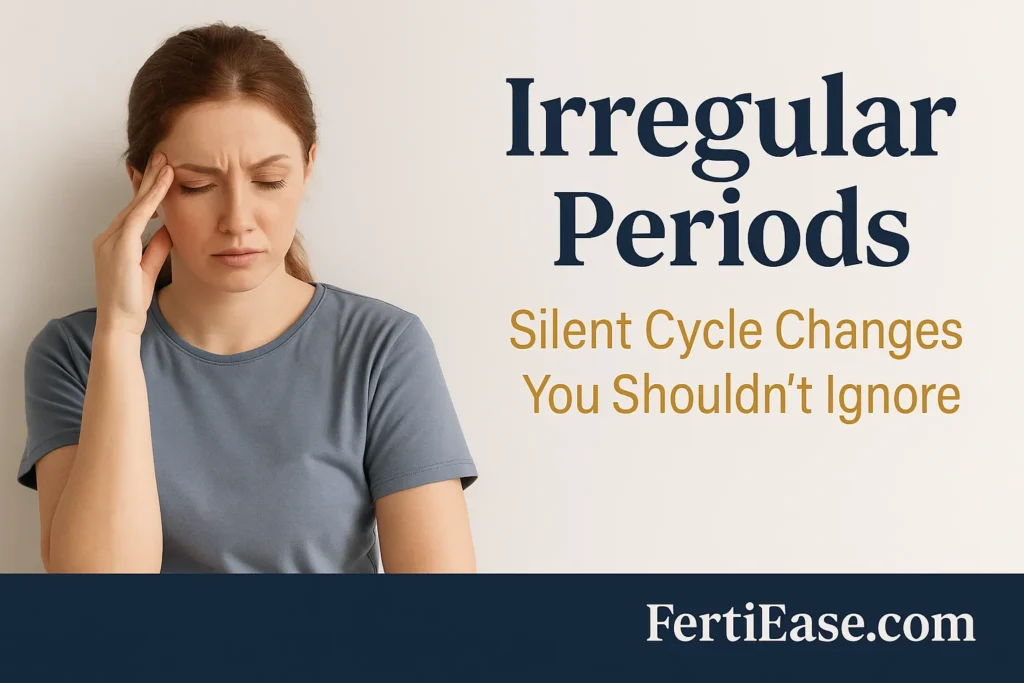

This guide breaks down the silent cycle changes you shouldn’t ignore and what they may be telling you about your hormones.
What Counts as an Irregular Period? (Clear Definition)
A healthy menstrual cycle lasts 24–35 days, with most cycles differing only a few days month to month.
A cycle becomes irregular when:
timing changes dramatically
cycles bounce between short and long
bleeding is unusually heavy or light
spotting appears unexpectedly
your cycle length becomes unpredictable
One irregular cycle is normal.
Three months of irregularity — that’s when hormones are truly shifting.
Hidden Hormonal Reasons for Irregular Periods
1. Ovulation Isn’t Happening Consistently
If you’re not ovulating, your period timing immediately becomes unpredictable.
Signs of inconsistent ovulation include:
months with no fertile cervical mucus
no clear LH surge
cycles longer than 35 days
cycles shorter than 24 days
period-like bleeding without true ovulation
This pattern is extremely common in women with stress-related cycle disruption or PCOS.
2. Stress Hormones Silently Overwhelm Your Cycle (Cortisol Spike)
Chronic stress raises cortisol, and cortisol directly suppresses reproductive hormones.
High cortisol can:
delay ovulation
shorten the luteal phase
cause early or late periods
trigger mid-cycle spotting
Many women experience irregular cycles in especially emotional months — even if they feel “fine.”
Your cycle feels your stress before you do.
3. Estrogen Dominance or Low Progesterone
If estrogen stays too high or progesterone too low, your menstrual rhythm becomes unstable.
Common symptoms:
heavy bleeding
PMS mood swings
very short cycles
breast tenderness
bloating
anxiety or irritability
When estrogen and progesterone stop balancing one another, the cycle length quickly changes.
4. Thyroid Shifts (One of the MOST Common Causes)
Both hyperthyroidism and hypothyroidism disrupt menstrual cycles.
Possible signs:
sudden period irregularity
weight changes
cold sensitivity
hair thinning
fatigue
The thyroid plays a massive role in cycle timing — even a small shift changes your period.
5. Blood Sugar Imbalance or Insulin Resistance
This is especially common in women with PCOS.
Insulin affects:
ovulation
androgen levels
estrogen production
cycle regularity
If cycles swing between long and short, blood sugar should always be considered.
Key Types of Irregular Periods (Which One Is Yours?)
1. Short Cycles (Less Than 24 Days)
Often linked to low progesterone or short luteal phases.
2. Long Cycles (35+ Days)
Common with delayed ovulation or PCOS patterns.
3. Missed Periods
Can occur with high stress, thyroid imbalance, or anovulatory cycles.
4. Spotting Between Periods
May indicate estrogen fluctuations or ovulation disturbance.
5. Very Light or Very Heavy Cycles
Hormonal imbalance affects lining thickness.
Each pattern reveals a different underlying hormonal story.
How Irregular Periods Affect Fertility
If your cycle is irregular, predicting ovulation becomes extremely difficult.
This means:
fewer fertile days
uncertain timing
reduced implantation success
inconsistent egg maturation
increased stress during TTC
Even women who ovulate irregularly may conceive — but it can take longer because the fertile window is harder to identify.
Signs Your Irregular Periods Need Attention (Don’t Ignore These)
Seek evaluation if:
cycles are irregular for 3+ months
cycles shorter than 24 days
cycles longer than 35 days
periods vanish for 2+ months
spotting appears every cycle
periods are extremely painful
bleeding is unusually heavy
TTC for 6–12 months without success
Cycle irregularity is NEVER random — there is always a root cause.
Simple Steps That May Support a More Regular Cycle
(Eğitici, tıbbi tavsiye değil; genel rehber niteliğindedir.)
stabilize sleep schedule
reduce caffeine in luteal phase
support thyroid health (iodine, selenium)
manage blood sugar (balanced meals, protein)
reduce chronic stress
track ovulation consistently
avoid endocrine-disrupting chemicals
consider magnesium & inositol support
maintain healthy body fat levels
Cycle regularity improves most when the underlying trigger is addressed.
What is your reaction to this article?

Penelope Smith is a certified fertility wellness coach and passionate advocate for natural conception with over 8 years of experience guiding couples on their TTC journeys. Drawing from her background in holistic nutrition and reproductive health counseling, she empowers women and men through evidence-based strategies, compassionate support, and practical lifestyle insights. A mother of two conceived naturally after her own fertility challenges, Penelope blends science, empathy, and real-world results in her writing. Her articles have helped thousands optimize ovulation, balance hormones, and embrace the emotional side of trying to conceive. Connect with her at hello@fertiease.com
VIEW AUTHOR PROFILE