
- 1. ⭐ 1. Your Luteal Phase Feels “Shorter Than It Should Be”
- 2. ⭐ 2. Spotting Before Your Period
- 3. ⭐ 3. Difficulty Sleeping or Waking Around 3 AM
- 4. ⭐ 4. PMS Feels More Intense Than It Should
- 5. ⭐ 5. Your Periods Are Becoming Heavier
- 6. ⭐ 6. Basal Body Temperature Doesn’t Rise Consistently
- 7. ⭐ 7. Trouble Maintaining Pregnancy (Chemical Losses)
- 8. ⭐ What Causes Low Progesterone?
- 9. ⭐ How It Quietly Impacts Fertility
Progesterone is the hormone that keeps your cycle steady, your luteal phase stable, and your body prepared for early pregnancy.
But here’s the part many women don’t know:
Even a small drop in progesterone can create subtle symptoms that are easy to ignore — yet powerful enough to affect fertility.
If you’ve ever wondered why your cycles feel a little off, why your PMS hits harder some months, or why implantation doesn’t seem to stick, low progesterone might be quietly working in the background.

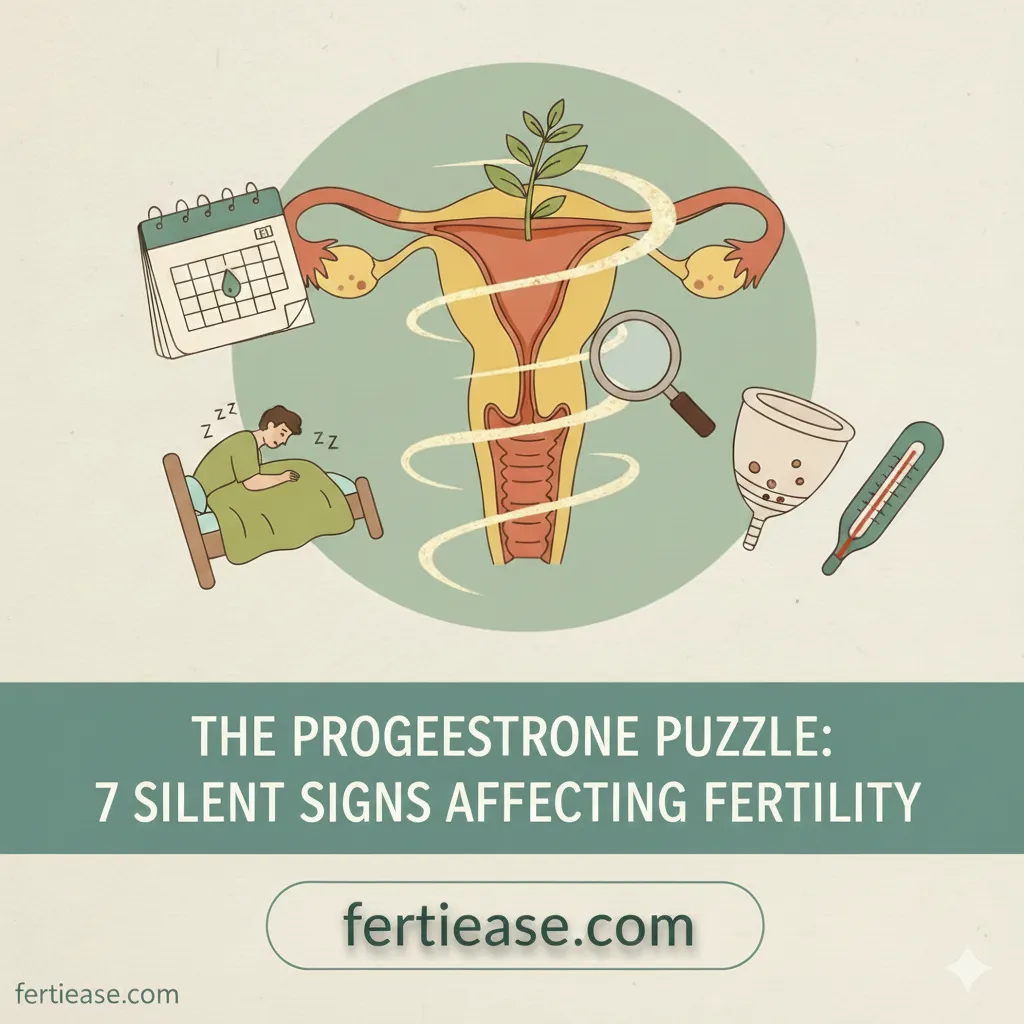
In this guide, we break down the clear, hidden, and often misunderstood signs of low progesterone — explained in a way that makes sense, without fear or confusion.
⭐ 1. Your Luteal Phase Feels “Shorter Than It Should Be”
A healthy luteal phase lasts 12–14 days.
If yours is consistently:
9–10 days
or even shorter
…it’s a strong early indicator of low progesterone.
A short luteal phase means the uterine lining doesn’t have enough hormonal support for implantation. Many women describe it as:
“My period came earlier than expected… again.”
This is one of the most reliable clues that progesterone levels may be dipping.
⭐ 2. Spotting Before Your Period
Light brown or pink spotting 2–3 days before your actual period often signals progesterone instability.
Why?
Progesterone’s job is to hold the uterine lining in place.
When levels fall early, the lining partially breaks down — causing early spotting.
Women trying to conceive frequently confuse this with implantation bleeding, but the timing and pattern often tell a different story.
⭐ 3. Difficulty Sleeping or Waking Around 3 AM
Progesterone has a natural calming effect on the brain.
When levels are low, sleep becomes disrupted — especially in the luteal phase.
Common patterns include:
restless sleep
trouble falling asleep
waking up between 2–4 AM
light, low-quality sleep
If sleep changes happen in the second half of your cycle, progesterone may be involved.
⭐ 4. PMS Feels More Intense Than It Should
Low progesterone amplifies:
mood swings
anxiety
irritability
breast tenderness
cravings
bloating
Many women describe these symptoms as “PMS on steroids.”
The emotional symptoms (especially anxiety spikes) are often the most noticeable.
⭐ 5. Your Periods Are Becoming Heavier
Progesterone stabilizes the uterine lining.
Low progesterone = thicker, more unstable lining.
This often leads to:
heavier flow
more clots
longer bleeding days
Many women think this is iron deficiency or “just stress,” but hormones are usually the root cause.
⭐ 6. Basal Body Temperature Doesn’t Rise Consistently
A stable post-ovulation temperature rise is a key sign of strong progesterone.
If your chart shows:
weak rise
unstable temps
temps that drop too early
…it may indicate low progesterone output.
This is one of the most useful TTC tools.
⭐ 7. Trouble Maintaining Pregnancy (Chemical Losses)
This is a sensitive topic — and progesterone is not the sole cause of early loss.
However, low progesterone can make implantation more difficult.
The issue is not “getting pregnant,” but staying pregnant long enough for hCG to rise.
If early positives fade quickly, progesterone may be worth discussing with a clinician.
⭐ What Causes Low Progesterone?
Most common triggers include:
chronic stress (cortisol competes with progesterone)
thyroid imbalance
weak or irregular ovulation
PCOS
under-eating or over-exercising
insufficient luteal support
perimenopause
inflammatory lifestyle patterns
Progesterone is only produced after ovulation, so if ovulation is weak or inconsistent, progesterone suffers too.
⭐ How It Quietly Impacts Fertility
Low progesterone can:
shorten luteal phase
disrupt implantation
destabilize uterine lining
lower cervical mucus quality
weaken temperature pattern
reduce early pregnancy support
Even mild imbalance affects conception probability.
The good news?
Progesterone issues are very common — and often manageable once identified.
What is your reaction to this article?

Penelope Smith is a certified fertility wellness coach and passionate advocate for natural conception with over 8 years of experience guiding couples on their TTC journeys. Drawing from her background in holistic nutrition and reproductive health counseling, she empowers women and men through evidence-based strategies, compassionate support, and practical lifestyle insights. A mother of two conceived naturally after her own fertility challenges, Penelope blends science, empathy, and real-world results in her writing. Her articles have helped thousands optimize ovulation, balance hormones, and embrace the emotional side of trying to conceive. Connect with her at hello@fertiease.com
VIEW AUTHOR PROFILE