

- 1. 🌱 What Is the Pelvic Floor?
- 2. 🤰 Why Pelvic Floor Exercises During Pregnancy Matter
- 3. ⚠️ Common Pelvic Floor Mistakes in Pregnancy
- 4. 💪 9 Pelvic Floor Exercises During Pregnancy (Safe & Effective)
- 4.1. 2. Basic Kegels (Gentle Activation)
- 4.2. 3. Relaxation Kegels (Release Matters)
- 4.3. 4. Pelvic Tilts
- 4.4. 5. Supported Squats
- 4.5. 6. Cat-Cow With Pelvic Awareness
- 4.6. 7. Side-Lying Leg Lifts
- 4.7. 8. Seated Core & Pelvic Engagement
- 4.8. 9. Labor-Prep Pelvic Floor Breathing
- 5. 🕒 How Pelvic Floor Training Changes by Trimester
- 5.1. First Trimester
- 5.2. Second Trimester
- 5.3. Third Trimester
- 6. 🚨 When to Stop and Seek Professional Advice
- 7. 📌 Related Articles
- 8. ✅ Final Thoughts
Pelvic floor health is one of the most overlooked—but most important—parts of a healthy pregnancy. Learning and practicing pelvic floor exercises during pregnancy can dramatically improve comfort, reduce common pregnancy issues, and make both labor and postpartum recovery smoother.
Your pelvic floor supports your uterus, bladder, and bowels. During pregnancy, these muscles carry increasing weight and pressure. Without proper support and awareness, issues like back pain, pelvic pressure, or urinary leakage can appear—even before birth.
In this guide, you’ll learn exactly how the pelvic floor works, why it matters during pregnancy, and 9 powerful, pregnancy-safe pelvic floor exercises you can start today.

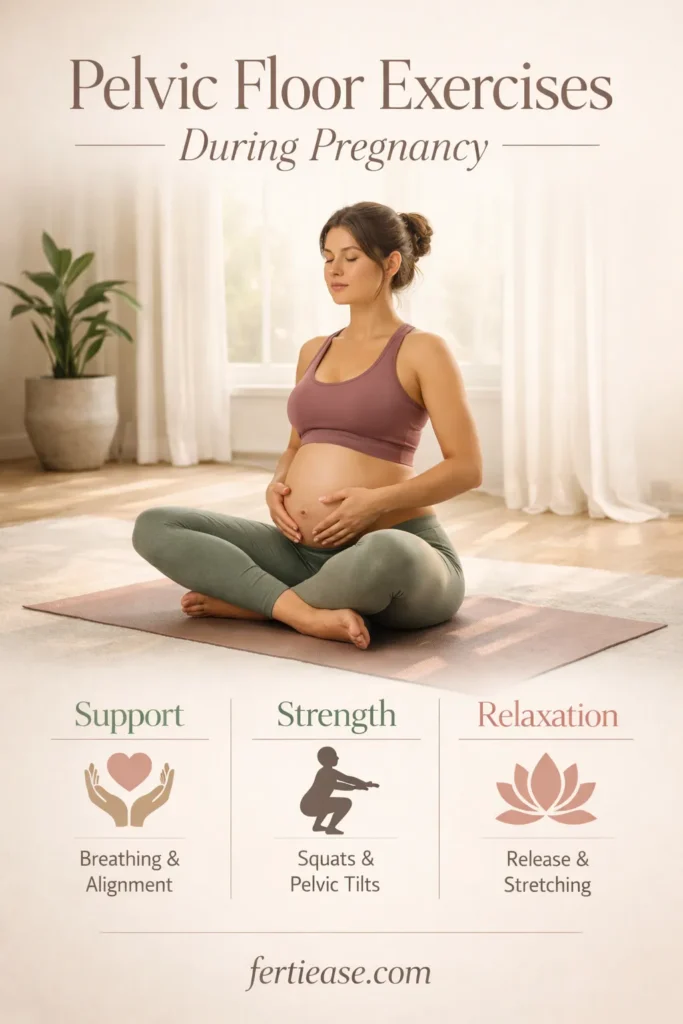
Pelvic Floor Exercises During Pregnancy 9 Powerful Moves For A Strong Supported Body 2 Fertiease
🌱 What Is the Pelvic Floor?
The pelvic floor is a group of muscles that form a hammock-like structure at the base of your pelvis. These muscles:
Support pelvic organs
Control bladder and bowel function
Play a key role in labor and delivery
Assist core stability and posture
During pregnancy, hormonal changes soften connective tissue while the growing baby increases downward pressure. This makes pelvic floor care essential—not optional.
🤰 Why Pelvic Floor Exercises During Pregnancy Matter
Regular pelvic floor exercises during pregnancy can help:
Prevent urinary leakage
Reduce pelvic and lower back pain
Improve posture and balance
Support the growing uterus
Prepare muscles for labor
Speed up postpartum recovery
Contrary to popular belief, pelvic floor training is not just about tightening—learning to relax these muscles is equally important.
⚠️ Common Pelvic Floor Mistakes in Pregnancy
Before starting exercises, it’s important to avoid common errors:
Overdoing Kegels without relaxation
Holding your breath during contractions
Clenching the glutes or inner thighs
Ignoring signs of pelvic pressure or pain
Pelvic floor training should always feel controlled, gentle, and intentional.
💪 9 Pelvic Floor Exercises During Pregnancy (Safe & Effective)
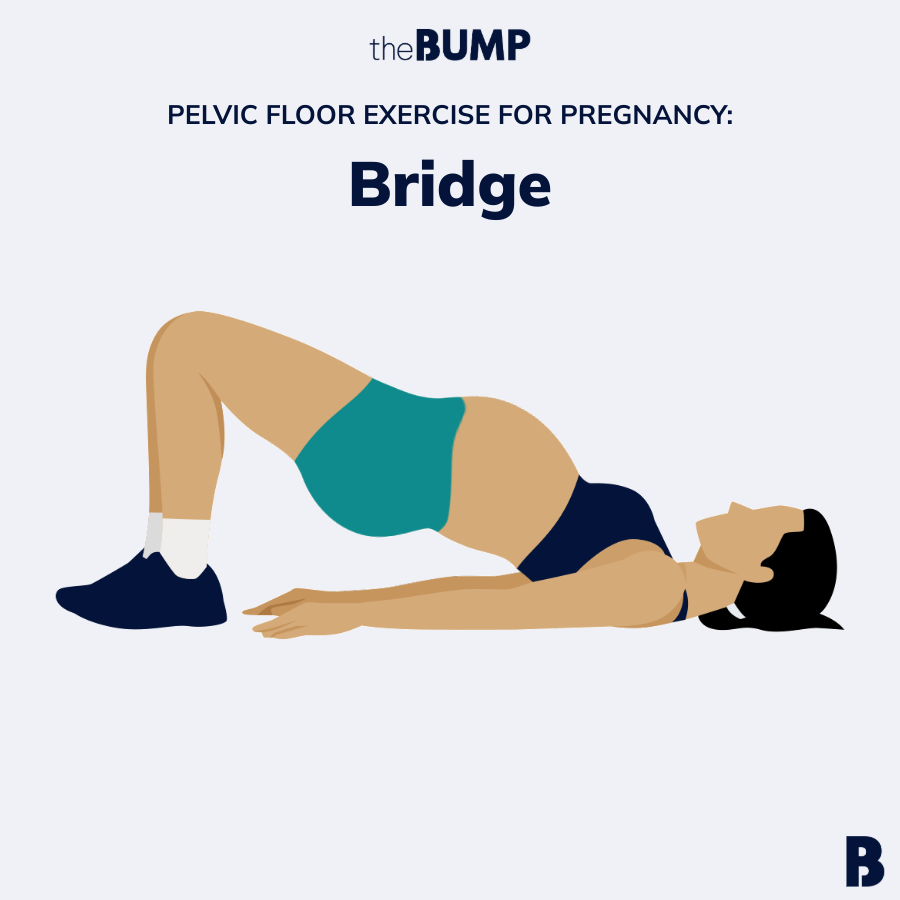

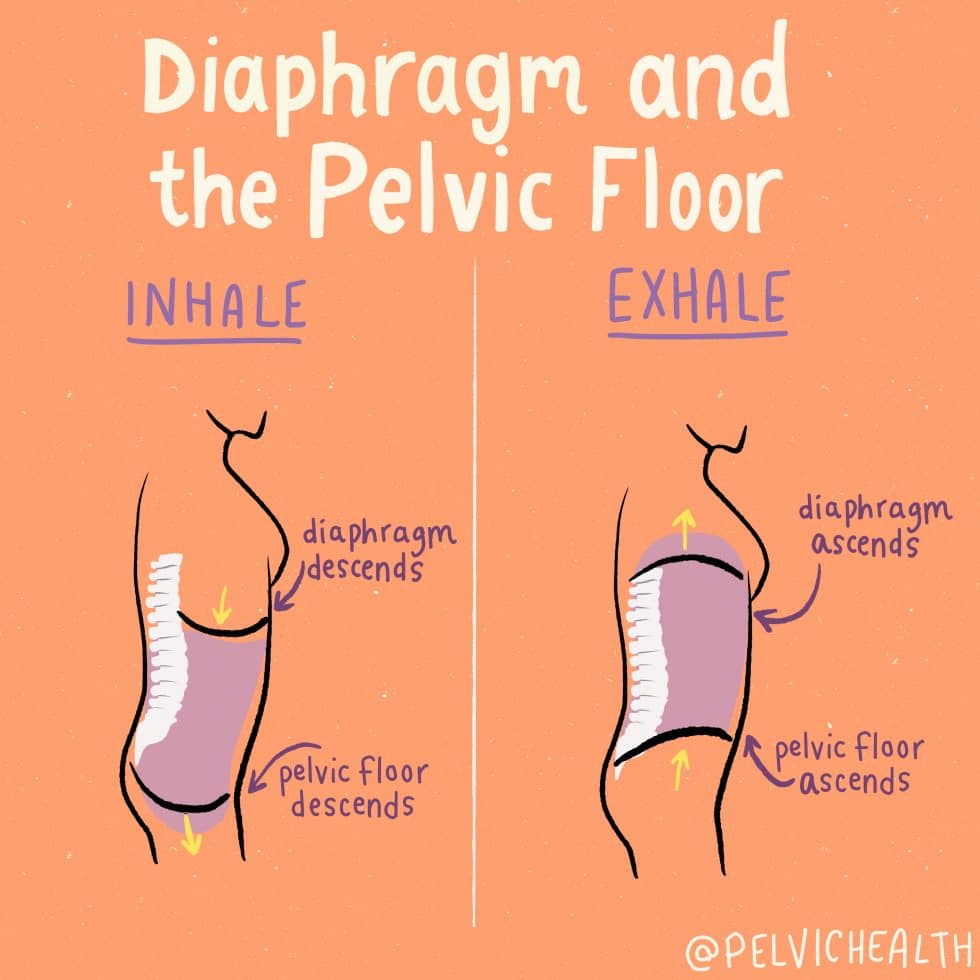
Proper breathing is the base of all pelvic floor work.
How it helps:
Coordinates pelvic floor movement
Reduces tension
Improves oxygen flow
Inhale through your nose, allowing your ribs to expand. Exhale slowly while gently engaging the pelvic floor.
2. Basic Kegels (Gentle Activation)
Kegels strengthen pelvic floor muscles when done correctly.
How to do them:
Gently lift the pelvic floor as if stopping urine
Hold for 3–5 seconds
Fully relax before repeating
Avoid straining or squeezing too hard.
3. Relaxation Kegels (Release Matters)
Equally important is learning to relax the pelvic floor.
Why this matters:
Prevents muscle tightness
Supports easier labor
Improves comfort
Focus on a slow exhale and imagine the pelvic floor softening downward.
4. Pelvic Tilts
Pelvic tilts engage the pelvic floor while relieving back tension.
Benefits:
Improves spinal alignment
Reduces lower back discomfort
Encourages pelvic awareness
Can be done standing, seated, or on hands and knees.
5. Supported Squats
Squats are functional movements that naturally engage the pelvic floor.
Why they’re effective:
Strengthen pelvic support muscles
Prepare the body for labor positions
Improve circulation
Use a wall or chair for balance and support.
6. Cat-Cow With Pelvic Awareness
This gentle movement improves mobility and coordination.
How it helps:
Encourages pelvic floor movement
Relieves spinal tension
Syncs breath with movement
Move slowly and stay within a comfortable range.
7. Side-Lying Leg Lifts
This exercise supports pelvic stability without pressure.
Benefits:
Strengthens hips and pelvic support
Reduces strain on the abdomen
Improves balance
Keep movements slow and controlled.
8. Seated Core & Pelvic Engagement
Sitting upright on a chair or exercise ball:
Gently engage pelvic floor
Maintain neutral posture
Focus on steady breathing
This builds endurance without overloading muscles.
9. Labor-Prep Pelvic Floor Breathing
Later in pregnancy, focus on relaxation and release.
Why it’s essential:
Helps during pushing
Reduces fear and tension
Improves labor efficiency
Visualization and slow breathing are key here.
🕒 How Pelvic Floor Training Changes by Trimester
First Trimester
Focus on awareness and breathing
Gentle activation only
Second Trimester
Balance strength and relaxation
Add functional movements like squats
Third Trimester
Prioritize relaxation and mobility
Prepare for labor positions
Listening to your body is crucial at every stage.
🚨 When to Stop and Seek Professional Advice
Stop exercises and consult a healthcare provider if you experience:
Pelvic pain or heaviness
Vaginal pain or pressure
Urinary discomfort
Pain during contractions
Pelvic floor health should never cause discomfort.
🔗 External references:
https://www.acog.org
https://www.nhs.uk
📌 Related Articles
👉 [Safe Core Exercises During Pregnancy: 8 Powerful Moves to Protect Your Body]
👉 [Is Plank Safe During Pregnancy? 7 Powerful Facts Every Mom-to-Be Should Know]
✅ Final Thoughts
Practicing pelvic floor exercises during pregnancy is one of the smartest investments you can make for your body. Strong, responsive pelvic floor muscles support your pregnancy, improve labor outcomes, and make recovery smoother after birth.
Remember: balance matters. Strength without relaxation can be just as problematic as weakness. Train with awareness, breathe deeply, and trust your body’s natural intelligence.
What is your reaction to this article?

Here is a professional English bio for Dr. Elizabeth Williams, Obstetrician-Gynecologist: Dr. Elizabeth Williams, MD, FACOG, is a board-certified obstetrician-gynecologist with over 15 years of experience providing compassionate, evidence-based women’s healthcare. She earned her medical degree from Johns Hopkins University School of Medicine and completed her residency in Obstetrics and Gynecology at Massachusetts General Hospital, Harvard Medical School, where she served as Chief Resident. Dr. Williams specializes in high-risk pregnancies, minimally invasive gynecologic surgery, adolescent gynecology, and menopause management. Known for her warm bedside manner and clear communication, she is dedicated to empowering her patients through every stage of life, from prenatal care and childbirth to preventive wellness and complex gynecologic conditions. In addition to her clinical practice, Dr. Williams is actively involved in medical education and has published research on preeclampsia, labor induction, and robotic-assisted surgery. She is a Fellow of the American College of Obstetricians and Gynecologists (FACOG) and a member of the Society for Maternal-Fetal Medicine. Patients describe Dr. Williams as “attentive, knowledgeable, and truly caring,” and she is proud to deliver hundreds of babies each year while building long-term relationships with the families she serves. Dr. Williams practices in [City/State] and is affiliated with [Hospital Name]. She welcomes new patients and offers both in-person and telemedicine appointments.
VIEW AUTHOR PROFILE