

- 1. 1. Your Menstrual Cycle Suddenly Changes
- 2. 2. Persistent Fatigue That Doesn’t Improve With Rest
- 3. 3. Mood Swings or Anxiety With No Clear Trigger
- 4. 4. Digestive Issues That Come and Go
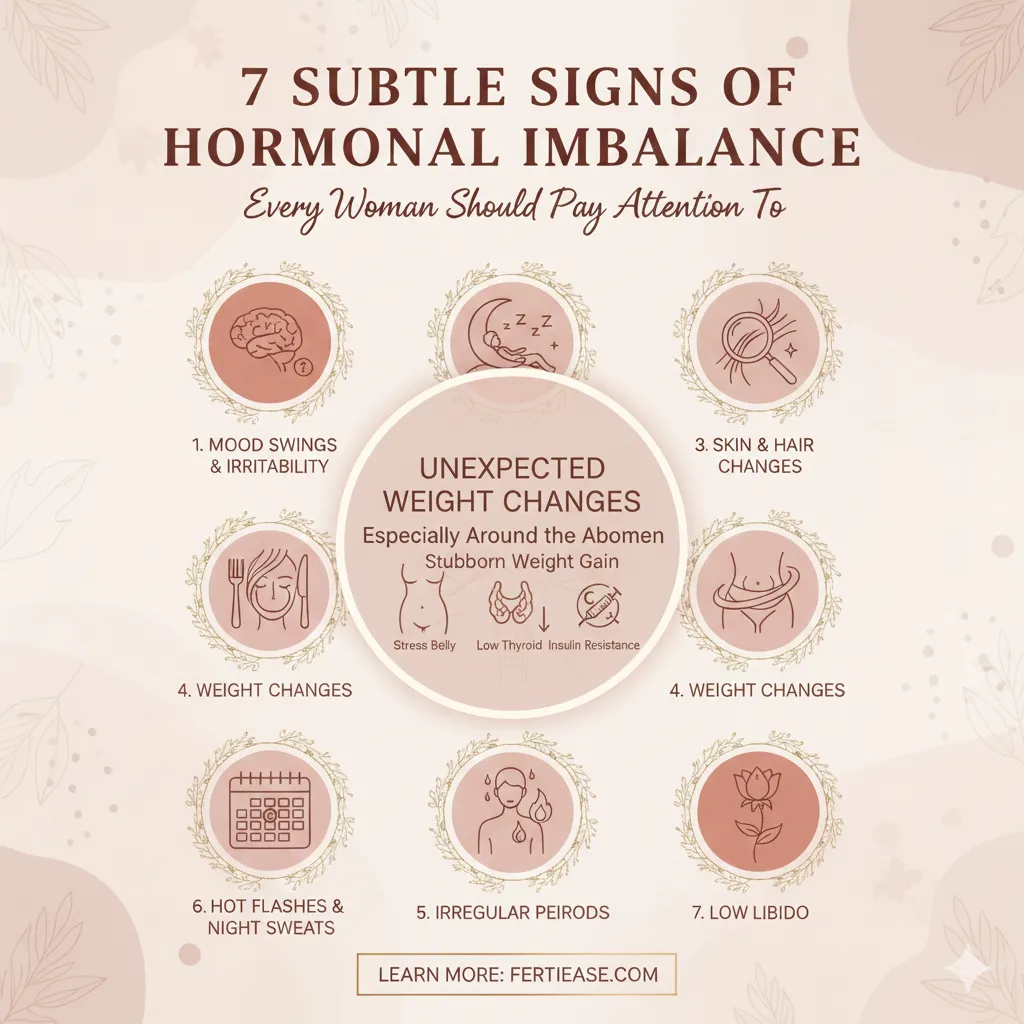
- 5. 5. Unexpected Weight Changes (Especially Around the Abdomen)
- 6. 6. Skin and Hair Changes
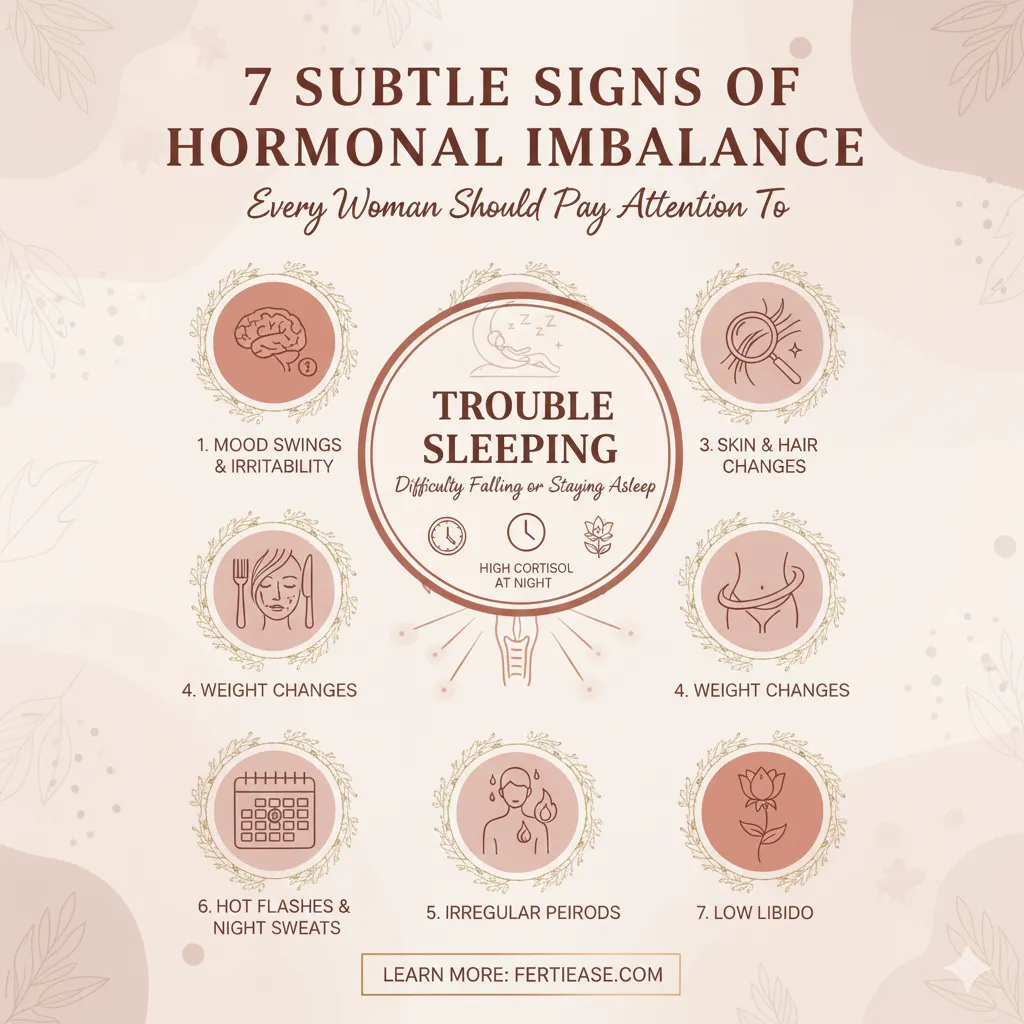
- 7. 7. Trouble Sleeping
- 1. 🩺 When Should You See a Professional?
- 2. 📌 Expert Insight
Hormones are like the body’s internal messaging system—quiet, powerful, and essential for almost every function that keeps you feeling well. When these hormones fall out of balance, the symptoms are often subtle at first. Many women dismiss them as “stress,” “normal aging,” or “just my cycle acting weird this month.”
But early hormonal imbalance is far more common than most realize.
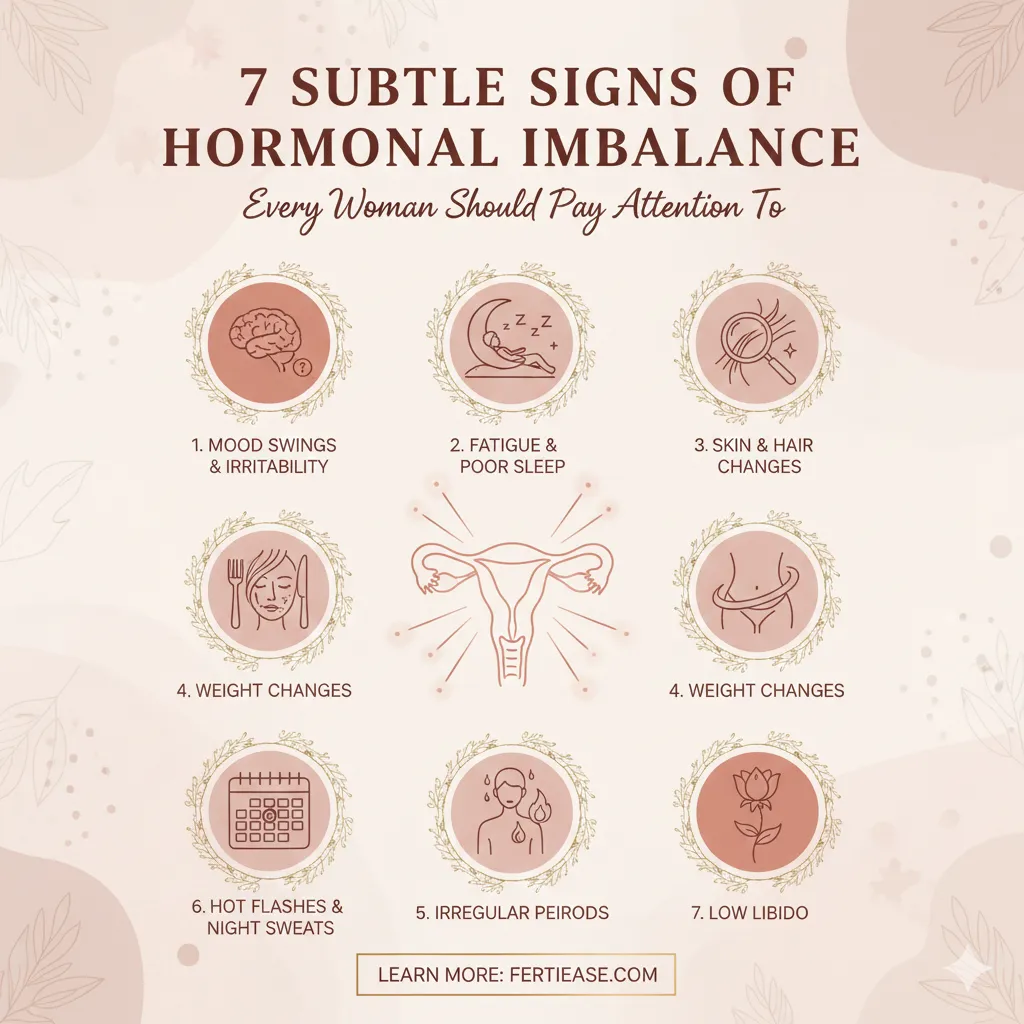
Understanding the early signs can help you take action before symptoms become disruptive or affect fertility, mood, metabolism, or long-term health. Here are seven signals worth noticing.
1. Your Menstrual Cycle Suddenly Changes
One of the earliest indicators of hormone disruption is an unexpected shift in your menstrual cycle.
This may include:

cycles shorter than 24 days or longer than 35 days
periods that skip months
unusually heavy or very light bleeding
new mid-cycle spotting
These changes often point to fluctuating estrogen or progesterone levels. If irregular cycles persist for more than two months, it’s worth discussing with a healthcare professional—especially if you’re trying to conceive.
2. Persistent Fatigue That Doesn’t Improve With Rest
Feeling tired is normal. Feeling exhausted no matter what is not.
Fatigue that lingers despite good sleep may be linked to:
low thyroid hormone
high cortisol from chronic stress
low progesterone
blood sugar fluctuations caused by hormonal shifts
Women often describe hormonal fatigue as “a heaviness that doesn’t go away,” making even small tasks feel draining.
3. Mood Swings or Anxiety With No Clear Trigger
Hormones have a direct impact on brain chemistry. When estrogen, progesterone, or cortisol levels shift, mood can shift with them.
Common emotional symptoms include:
sudden irritability
unexplained anxiety or worry
emotional sensitivity
feeling overwhelmed easily
This type of mood change is not “in your head.”
It’s often a sign of disrupted estrogen or low progesterone, both of which influence serotonin and GABA — the brain’s calming neurotransmitters.

4. Digestive Issues That Come and Go
Few women realize that hormones strongly affect gut function.
Estrogen and progesterone influence how quickly food moves through the digestive tract.
Imbalances may cause:
bloating
constipation or diarrhea
nausea around ovulation or your period
new food sensitivities
If your digestive symptoms fluctuate with your cycle, hormones may be the missing piece.
5. Unexpected Weight Changes (Especially Around the Abdomen)
When hormones shift, metabolism often shifts too.
Common hormonal causes of sudden weight gain include:
elevated cortisol (“stress belly”)
low thyroid hormone
insulin resistance
low progesterone
Weight changes from hormonal imbalance often appear without any diet or lifestyle change—and usually feel frustratingly stubborn.
6. Skin and Hair Changes
Your skin and hair are highly responsive to your endocrine system.
Hormonal imbalance may lead to:
acne along the jawline
sudden dryness or oiliness
hair thinning
hair shedding
brittle nails
If these changes appear out of nowhere, hormones—especially androgens, estrogen, or thyroid hormones—may be playing a role.
7. Trouble Sleeping
Sleep disturbances are one of the most overlooked indicators of hormonal shifts.
Difficulty falling or staying asleep is often related to:
low progesterone (a natural calming hormone)
high cortisol at night
declining estrogen
Women commonly report waking between 2–4 a.m., a classic pattern linked to cortisol imbalance.
🩺 When Should You See a Professional?
If symptoms persist for 8–12 weeks, or if they begin affecting daily life, it’s worth discussing them with a healthcare provider. Blood tests for thyroid function, estrogen, progesterone, and cortisol patterns can provide clarity.
📌 Expert Insight
“Many women normalize symptoms that are actually early signs of hormonal disruption. Identifying these changes early allows for simple lifestyle adjustments before more serious issues arise.”
— Dr. Emily Harper, MD, Women’s Health & Endocrinology
What is your reaction to this article?

Hi, I’m Mary! I’m a women’s health educator, certified Fertility Awareness Method (FAM) instructor, and a total cycle nerd who’s been charting my own cycles for over a decade. After ditching hormonal birth control in my mid-20s and realizing how little I actually knew about my body, I dove head-first into the science of natural fertility tracking. What started as a personal experiment turned into a full-on passion: helping women reclaim their cycles, conceive confidently, or avoid pregnancy without side effects. When I’m not geeking out over cervical mucus patterns or BBT charts, you’ll find me sipping herbal tea, tending my (slightly chaotic) houseplant jungle, or walking my rescue dog with a podcast in my ears. I believe knowledge is power, and understanding your cycle is one of the kindest things you can do for yourself. Thanks for being here — let’s decode your body together! 🌿
VIEW AUTHOR PROFILE