
- 1. 1. Difficulty Conceiving After 6–12 Months
- 2. Signs of Low Sperm Count — Subtle Symptoms Most Men Ignore
- 3. 2. Reduced Sex Drive (Low Libido)
- 4. 3. Erectile Dysfunction or Difficulty Maintaining an Erection
- 5. 4. Low Semen Volume
- 6. 5. Pain, Swelling, or a Lump in the Testicles
- 7. 6. Decreased Facial or Body Hair
- 8. 7. Difficulty Achieving Orgasm or Low Ejaculate Pressure
- 9. 8. Testicles That Feel Smaller or Softer Than Usual
- 10. Signs of Low Sperm Count — Lifestyle Patterns That Reveal the Problem
- 11. 9. Chronic Fatigue or Reduced Energy Levels
- 12. 10. Frequent Respiratory Infections
- 12.1. 🔗 Internal Link
- 1. ⭐ What to Do If You Suspect Low Sperm Count
Signs of low sperm count often go unnoticed because most men don’t experience obvious symptoms. Yet male fertility plays a role in nearly half of all infertility cases — and understanding these early indicators can significantly improve the chances of successful conception. Sperm count affects not only male reproductive health but also hormonal balance, overall vitality, and long-term wellness.
This article breaks down 10 science-backed signs that may suggest low sperm count, along with what steps to take next. It also builds on our previous guide, 9 Scientifically Proven Ways to Increase Sperm Count Fast, for a complete fertility roadmap.
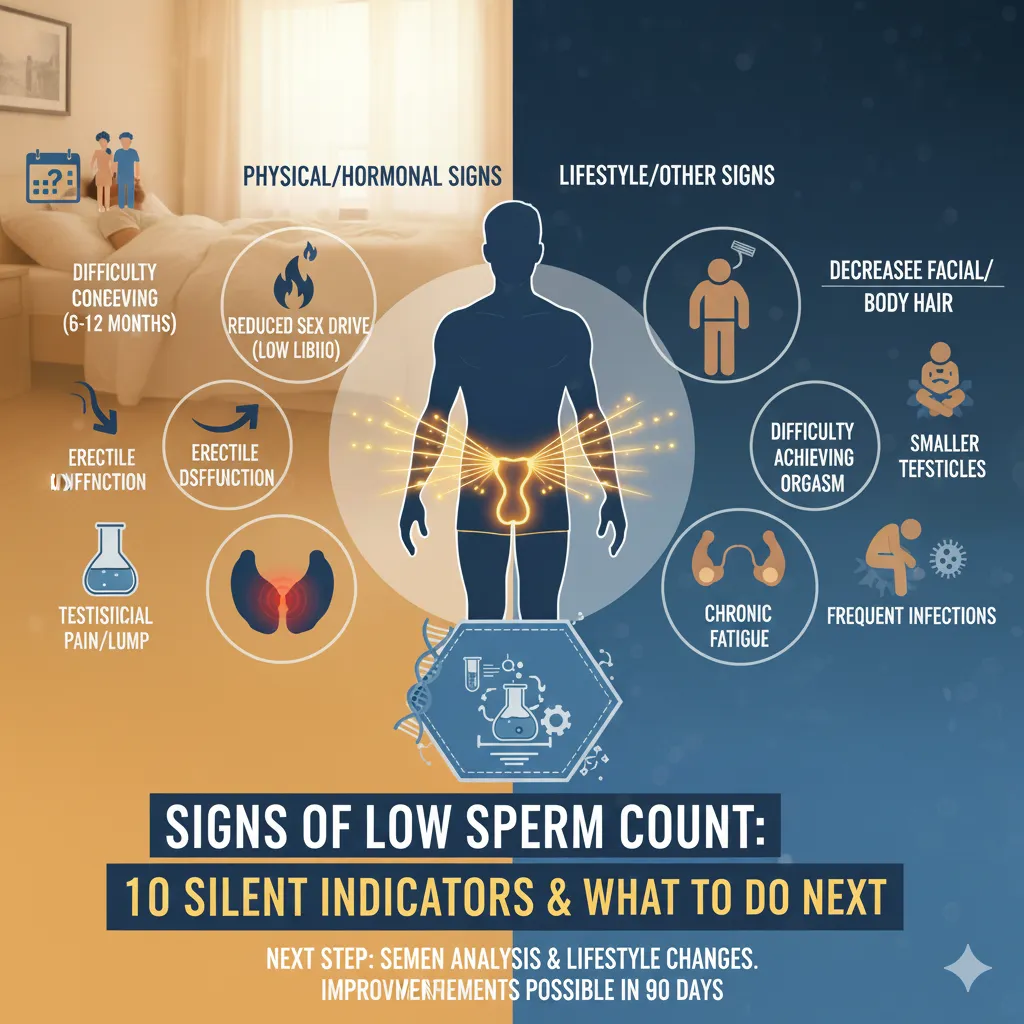
10 Clear Signs Of Low Sperm Count And What You Should Do Next Fertiease
1. Difficulty Conceiving After 6–12 Months
The most common (and often the first) sign of low sperm count is struggling to conceive despite regular, unprotected intercourse.
Doctors generally consider:

6 months → If the woman is 35 or older
12 months → If the woman is under 35
A reason to investigate male fertility.
Mayo Clinic identifies persistent difficulty conceiving as the #1 clinical indicator of male infertility.
Source: https://www.mayoclinic.org/
Signs of Low Sperm Count — Subtle Symptoms Most Men Ignore
Low sperm count doesn’t always cause physical symptoms, but when it does, they’re often hormonal or sexual in nature. The following are the most commonly reported yet overlooked indicators.
2. Reduced Sex Drive (Low Libido)
Testosterone and sperm production are closely linked.
If testosterone drops, libido usually follows — and this may signal impaired sperm production.
3. Erectile Dysfunction or Difficulty Maintaining an Erection
Erectile issues can be connected to low testosterone, vascular problems, or hormonal imbalance — all of which affect sperm count.
4. Low Semen Volume
If semen appears noticeably thinner or reduced in amount, it may indicate a deficiency in seminal fluid, which influences sperm concentration.
Normal semen volume: 1.5–5 ml
Consistently low volume can reflect low sperm count or blocked ducts.
5. Pain, Swelling, or a Lump in the Testicles
Discomfort in the testicles is often linked to conditions like varicocele — a leading cause of low sperm count that affects nearly 40% of infertile men.
If pain persists, medical consultation is essential.
6. Decreased Facial or Body Hair
Low testosterone may reduce:
Beard growth
Chest hair
General body hair density
This hormonal imbalance can directly affect sperm production.
7. Difficulty Achieving Orgasm or Low Ejaculate Pressure
Hormonal disturbances or nerve-related issues affecting ejaculation may indicate sperm production challenges as well.
8. Testicles That Feel Smaller or Softer Than Usual
Healthy sperm production requires healthy testicular tissue.
Smaller, softer, or asymmetric testicles may indicate reduced sperm-producing capability.
Signs of Low Sperm Count — Lifestyle Patterns That Reveal the Problem
Beyond physical changes, certain lifestyle symptoms strongly correlate with low sperm count.
9. Chronic Fatigue or Reduced Energy Levels
Low testosterone doesn’t only affect fertility — it affects energy, sleep, strength, and mental clarity.
If fatigue persists despite rest, hormone testing may be needed.
10. Frequent Respiratory Infections
Men with hormonal imbalances or genetic conditions (like Klinefelter syndrome) may experience weakened immunity, leading to recurrent infections — indirectly signaling sperm-related issues.
🔗 Internal Link
For actionable improvement methods, read:
👉 9 Scientifically Proven Ways to Increase Sperm Count Fast
⭐ What to Do If You Suspect Low Sperm Count
If you recognize multiple signs listed here, the next step is a semen analysis — the only definitive way to measure sperm count, motility, and morphology.
Most men improve their sperm parameters significantly within 3 months with lifestyle changes, supplements, weight management, and medical treatment if needed.
Male fertility is highly responsive — small consistent improvements can create major results.
What is your reaction to this article?

Penelope Smith is a certified fertility wellness coach and passionate advocate for natural conception with over 8 years of experience guiding couples on their TTC journeys. Drawing from her background in holistic nutrition and reproductive health counseling, she empowers women and men through evidence-based strategies, compassionate support, and practical lifestyle insights. A mother of two conceived naturally after her own fertility challenges, Penelope blends science, empathy, and real-world results in her writing. Her articles have helped thousands optimize ovulation, balance hormones, and embrace the emotional side of trying to conceive. Connect with her at hello@fertiease.com
VIEW AUTHOR PROFILE